What is SDR?
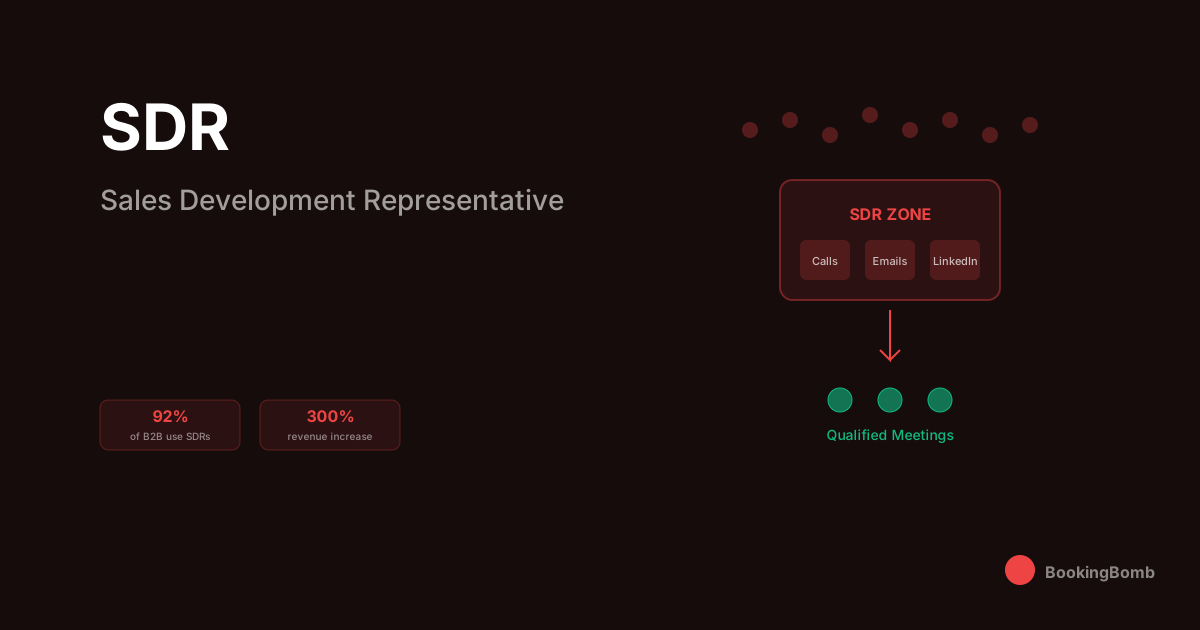
A Sales Development Representative (SDR) is a sales professional who focuses exclusively on outbound prospecting and qualifying leads at the top of the funnel. SDRs don't close deals—they identify and qualify potential customers, then hand them off to Account Executives (AEs) who take them through the rest of the sales process. Think of SDRs as the specialized hunters who find and vet opportunities so closers can focus on closing.
Why SDR Matters
SDRs are the engine that keeps your pipeline full. Without dedicated prospecting, even the best Account Executives spend half their time hunting for leads instead of closing deals. The SDR model exists because specialization wins. When Salesforce pioneered the SDR role in the early 2000s, they discovered that splitting prospecting from closing increased revenue by 300%. The math is simple: AEs cost 2-3x more than SDRs. Every hour an AE spends cold calling is money wasted. SDRs generate pipeline at a fraction of the cost, letting your expensive closers do what they're paid for. Companies with strong SDR programs see 30% higher win rates because AEs only talk to qualified prospects. The SDR role also serves as your sales talent pipeline—future AEs, managers, and leaders often start here, learning your product, market, and customers from the ground up.
92%
of B2B companies use SDRs
14
average months in SDR role before promotion
300%
revenue increase from SDR specialization
How SDR Works
Target account research
SDRs research assigned accounts to identify key decision-makers, understand company challenges, and find compelling outreach angles. Good research makes or breaks outreach effectiveness.
Multi-channel prospecting
SDRs execute outreach sequences combining cold calls, emails, LinkedIn messages, and sometimes direct mail. The best SDRs run 80-100+ activities daily across multiple channels.
Initial qualification
When a prospect engages, the SDR qualifies them using frameworks like BANT or MEDDIC. The goal is to confirm there's a real opportunity worth pursuing.
Meeting scheduling
For qualified prospects, SDRs book discovery calls or demos with Account Executives. They coordinate calendars and ensure prospects show up prepared.
Handoff to Account Executive
SDRs provide detailed notes on the prospect's situation, challenges, and qualification details. A good handoff sets the AE up for success.
Best Practices
Specialize SDRs by territory, vertical, or account tier—jack-of-all-trades SDRs underperform
Set activity minimums but measure on outcomes—100 bad calls don't equal 10 good conversations
Invest in enablement and coaching—the SDR role has steep learning curves and high burnout
Create clear qualification criteria to prevent bad-fit meetings from wasting AE time
Build a realistic ramp period—new SDRs rarely hit quota in their first 3 months
Pair SDRs with AEs and share commission on closed deals to align incentives
Track leading indicators like connection rates and reply rates, not just meetings booked
Provide a clear career path—SDRs need to see promotion is real and achievable
Common Mistakes
- • Hiring SDRs before having a repeatable sales motion—they'll flail without a playbook
- • Setting unrealistic quotas that burn out reps and tank morale
- • Measuring only meeting quantity without tracking meeting quality and conversion
- • Not investing in tools and data—SDRs can't prospect effectively with bad contact info
- • Treating SDR as a dead-end role instead of a launchpad for sales careers
- • Letting SDRs qualify too loosely to hit meeting numbers—this poisons the pipeline
- • Skipping 1:1 coaching and call reviews—SDRs need constant feedback to improve
- • Not aligning SDR compensation with pipeline quality and downstream conversion
Related Terms
Stop Studying. Start Closing.
Now you know what SDR means. Let us put it to work for you.
Book Your Strategy Call