What is BANT?
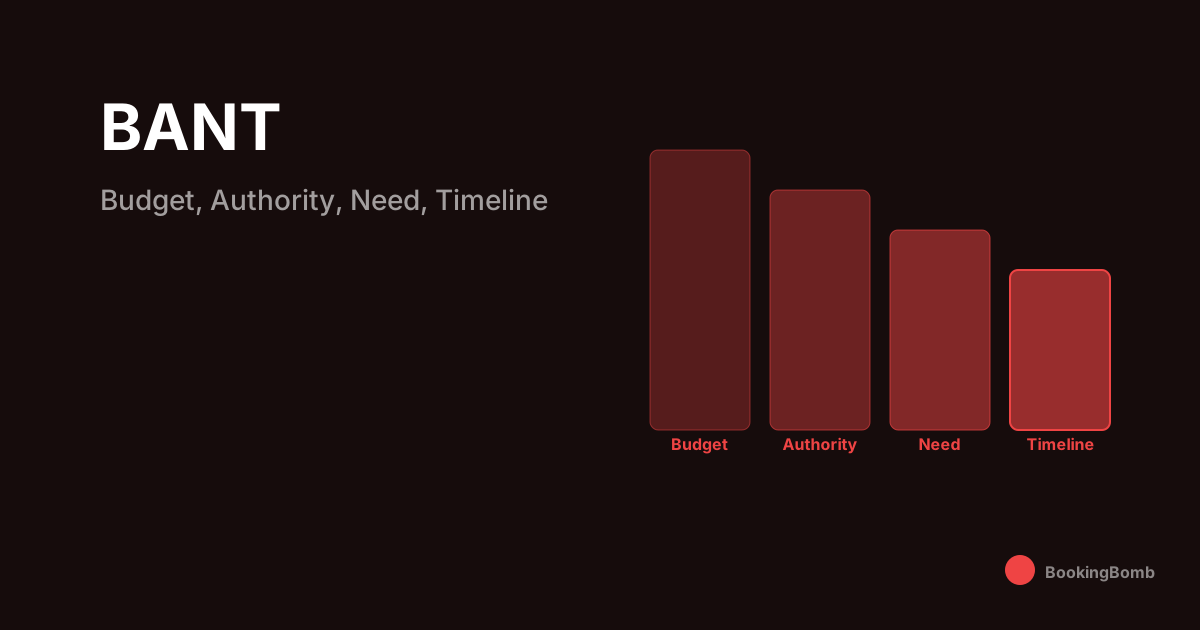
BANT is a sales qualification framework that evaluates prospects based on four criteria: Budget (can they afford it?), Authority (can they make the decision?), Need (do they have a problem you solve?), and Timeline (when do they need to act?). It's one of the oldest and most widely used qualification methodologies in B2B sales.
Why BANT Matters
BANT prevents your sales team from wasting time on deals that will never close. Every hour spent on an unqualified prospect is an hour not spent on a real opportunity. The framework forces reps to ask hard questions early: Can this person actually buy? Do they have money? Is there urgency? Without qualification, pipelines fill with fantasy deals that look impressive but never convert. BANT has endured for 60+ years because it works. While critics argue it's outdated for modern buying committees, the underlying logic remains sound—you need someone with authority, budget, genuine need, and reason to act. Companies that rigorously qualify see 30% higher win rates because they focus on deals that can actually close.
67%
of lost deals lacked proper qualification
30%
higher win rates with BANT qualification
60+
years BANT has been in use
How BANT Works
Budget qualification
Determine if the prospect has budget allocated or can secure funding. Ask about budget range, fiscal year timing, and whether similar purchases have been made before.
Authority identification
Identify the decision-maker and understand the buying process. Who signs contracts? Who influences the decision? What's the approval chain?
Need assessment
Confirm there's a real problem your solution addresses. What's the pain? How severe is it? What happens if they don't solve it?
Timeline establishment
Understand when they need to make a decision and implement. Is there an event driving urgency? What's blocking them from acting now?
Score and prioritize
Deals that check all four boxes get prioritized. Deals missing criteria either need development or disqualification.
Best Practices
Don't ask BANT questions like a checklist—weave them naturally into discovery conversations
Qualify Authority carefully—the person you're talking to may not be the actual decision-maker
Understand that modern deals often have multiple stakeholders—identify the buying committee
Use Need as the starting point—without pain, nothing else matters
Be willing to disqualify—saying no to bad fits is as important as saying yes to good ones
Document BANT findings in your CRM for handoff and forecasting accuracy
Re-qualify throughout the sales cycle—situations change and deals can become unqualified
Common Mistakes
- • Treating BANT as a rigid checklist instead of a discovery framework
- • Assuming the first contact has authority when they're often just researchers
- • Accepting vague answers—'we have budget' means nothing without specifics
- • Ignoring timeline—deals without urgency stall forever
- • Over-qualifying early prospects—some BANT elements emerge later in complex sales
- • Not adapting BANT for modern buying—committees, not individuals, make B2B decisions now
Related Terms
Stop Studying. Start Closing.
Now you know what BANT means. Let us put it to work for you.
Book Your Strategy Call