What is Sales Pipeline?
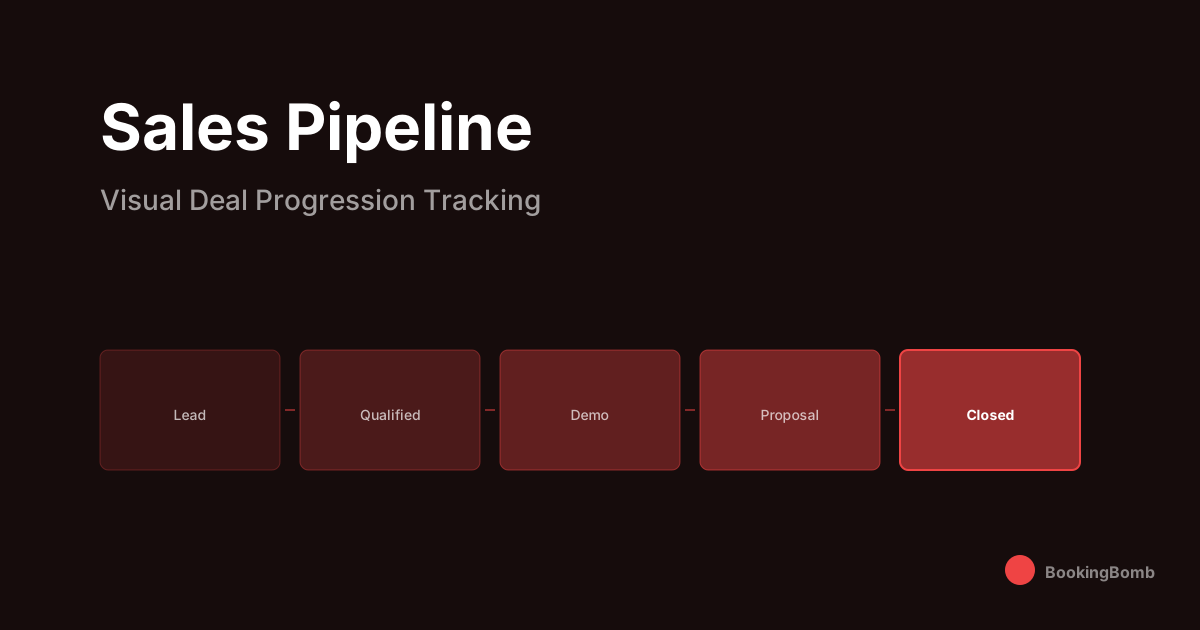
A sales pipeline is a visual representation of where prospects are in your sales process, from initial contact to closed deal. Each stage represents a milestone in the buyer's journey, and deals move through stages as they progress. Your pipeline is both a snapshot of current opportunities and a forecasting tool for predicting future revenue.
Why Sales Pipeline Matters
Your pipeline is the lifeblood of your sales organization. It shows what you're working on, what's likely to close, and where you have gaps. Without pipeline visibility, sales management is guesswork—you can't coach what you can't see, and you can't forecast what you don't track. Pipeline metrics reveal the health of your business. Shrinking pipeline means future revenue problems. Stalled deals indicate process issues. Stage conversion rates expose where deals die. Companies that actively manage pipeline see 28% higher revenue growth because they catch problems early and allocate resources effectively. Your pipeline also enables accountability. When every rep's opportunities are visible, sandbagging and happy ears become harder. Pipeline reviews become productive coaching sessions instead of finger-pointing exercises.
28%
higher revenue with active pipeline management
72%
of sales managers review pipeline weekly
3x
pipeline needed to hit quota reliably
How Sales Pipeline Works
Define pipeline stages
Create stages that reflect meaningful milestones in your sales process—typically 5-7 stages from lead to close. Each stage should have clear entry and exit criteria.
Set stage probabilities
Assign win probability percentages to each stage based on historical data. Early stages might be 10-20%, late stages 70-80%.
Add opportunities to pipeline
When a lead qualifies, create an opportunity with deal value, expected close date, and current stage. This makes it part of your formal pipeline.
Progress deals through stages
As deals advance, move them to appropriate stages. Update values and close dates as you learn more. Document next steps and blockers.
Calculate pipeline metrics
Track total pipeline value, weighted pipeline (value × probability), pipeline coverage (pipeline ÷ quota), and velocity (how fast deals move).
Conduct pipeline reviews
Regular reviews with sales managers examine deal health, identify stuck opportunities, and ensure forecast accuracy.
Best Practices
Define clear, objective criteria for each stage—eliminate subjectivity about where deals belong
Maintain 3-4x pipeline coverage to quota—this buffers against normal loss rates
Review pipeline weekly at minimum—stale pipeline data leads to forecast misses
Age out stale opportunities—deals sitting in the same stage for 2x average cycle should be scrutinized
Track pipeline by source to understand which channels generate best opportunities
Separate pipeline views by segment—enterprise and SMB pipelines have different dynamics
Use pipeline velocity, not just value—fast-moving small deals can outperform slow big ones
Document next steps for every opportunity—deals without actions stall
Common Mistakes
- • Having too many stages—complexity reduces adoption and muddies analysis
- • Vague stage definitions that let reps interpret stages differently
- • Not enforcing data hygiene—garbage pipeline data makes forecasting impossible
- • Focusing only on pipeline value while ignoring pipeline quality and velocity
- • Letting zombie deals linger—they inflate coverage and distort forecasts
- • Not segmenting pipeline—mixing deal sizes and types hides important patterns
- • Reviewing pipeline only monthly—too much can change in 30 days
- • Using pipeline reviews for blame instead of coaching
Related Terms
Stop Studying. Start Closing.
Now you know what Sales Pipeline means. Let us put it to work for you.
Book Your Strategy Call