What is Win Rate?
Win rate is the percentage of sales opportunities that result in closed-won deals. Calculated as (deals won / total deals closed) × 100, it's the most direct measure of sales effectiveness. Win rate answers a simple question: when we're in a deal, how often do we win? It's distinct from conversion rate, which measures movement between funnel stages, and close rate, which can include various definitions.
Why Win Rate Matters
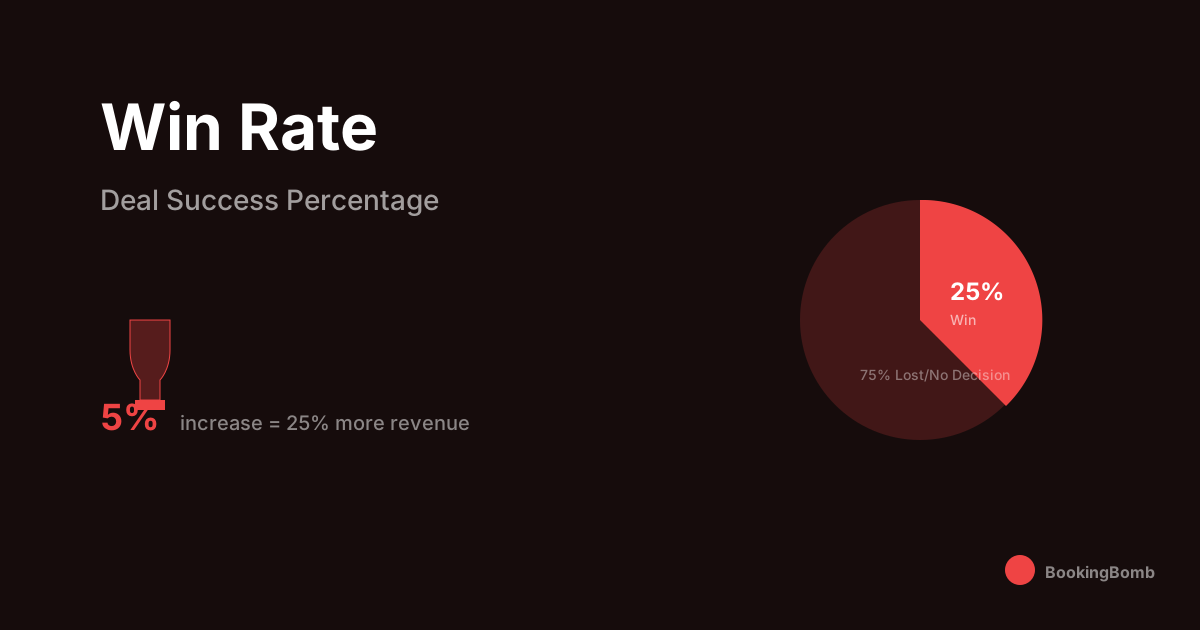
Win rate is the ultimate test of your sales capability. You can generate plenty of pipeline, but if you can't win deals, pipeline is just expensive theater. Win rates reveal whether your product, pricing, positioning, and sales skills can beat competitors when it matters. Improving win rate has enormous leverage. A 5-percentage-point increase in win rate (say, from 20% to 25%) represents a 25% increase in revenue from the same pipeline. That's often more achievable than generating 25% more pipeline—and it costs less. Win rate trends are also diagnostic. Declining win rates might signal new competition, pricing issues, or rep skill gaps. Improving win rates suggest your differentiation is landing. Segment-level win rate analysis reveals where you're strong and where you're vulnerable.
20-25%
average B2B SaaS win rate
47%
of forecasted deals end in no decision
5%
win rate increase = 25% more revenue
How Win Rate Works
Define opportunity criteria
Determine what qualifies as an 'opportunity' in your CRM. Consistency is essential—if definitions vary, win rates become meaningless.
Track closed outcomes
Record every opportunity as closed-won, closed-lost, or closed-no decision. Never delete lost deals—they're essential for analysis.
Calculate the rate
Divide won deals by total closed deals (won + lost). Some companies include no-decisions; others don't. Pick a method and stay consistent.
Segment the analysis
Calculate win rates by deal size, segment, source, rep, competitor, and sales cycle stage reached. Aggregate rates hide critical insights.
Analyze loss reasons
Understand why you lose—price, product gaps, competition, no decision. Loss reason analysis guides product and sales improvements.
Track trends over time
Monitor win rate trajectories. Quarterly trends reveal whether you're getting better or worse at competing.
Best Practices
Calculate win rate consistently—define opportunity criteria and stick to them
Separate competitive losses from no-decisions—they indicate different problems
Segment by deal size—enterprise and SMB win rates are often very different
Analyze win rates by competitor—know where you win and where you lose
Track win rate by sales stage reached—deals that reached demo have different rates than those that didn't
Study won deals as carefully as lost deals—understand what made you win
Set win rate targets by segment and hold teams accountable
Use win/loss analysis to improve product, positioning, and sales training
Common Mistakes
- • Calculating win rate inconsistently across teams or time periods
- • Not distinguishing losses from no-decisions—they have different causes and solutions
- • Only tracking aggregate win rate—missing segment-specific insights
- • Deleting or hiding lost deals to artificially inflate win rates
- • Not capturing accurate loss reasons—guessing doesn't help you improve
- • Ignoring win rate trends—focusing only on point-in-time snapshots
- • Using win rate as the only success metric—ignoring pipeline health and velocity
Related Terms
Stop Studying. Start Closing.
Now you know what Win Rate means. Let us put it to work for you.
Book Your Strategy Call