What is Sales Cadence?
A sales cadence is a structured sequence of sales activities—calls, emails, social touches, and other outreach—designed to engage prospects over a defined period. It's the playbook that tells reps exactly what to do, when to do it, and through which channel. A well-designed cadence ensures consistent, multi-touch engagement instead of sporadic, one-and-done outreach attempts.
Why Sales Cadence Matters
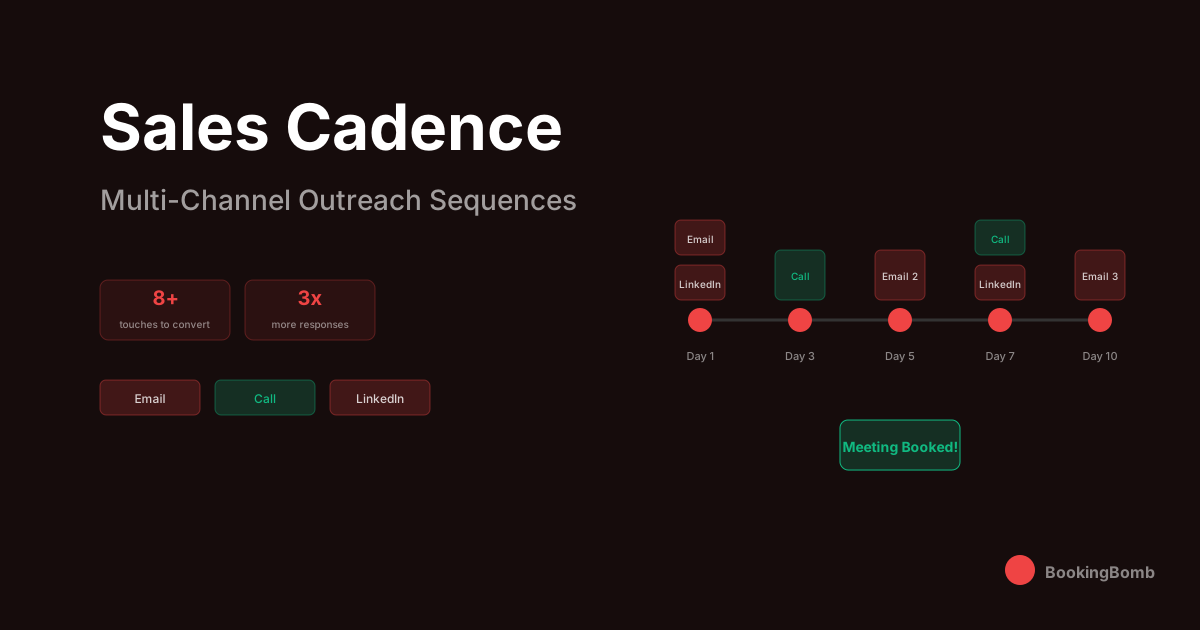
The average B2B sale requires 8+ touches to generate a conversion, but most reps give up after 2. Sales cadences solve this persistence problem by systematizing follow-up. Without a cadence, reps either under-touch (giving up too soon) or over-touch (annoying prospects into blocking them). Neither wins deals. Cadences create consistency across your sales team. When every rep follows the same playbook, you can measure what works, coach to specific steps, and predict pipeline with confidence. Randomized outreach is impossible to optimize. The best cadences are multi-channel because buyers have preferences. Some live in their inbox, others on LinkedIn, others only answer phone calls. A cadence that spans channels catches prospects where they actually engage. Companies with defined cadences see 2-3x more responses than those relying on ad-hoc outreach—that's the difference between hitting quota and missing it.
8+
touches needed to generate a conversion
44%
of reps give up after one follow-up
3x
more responses with structured cadences
How Sales Cadence Works
Define cadence parameters
Determine total duration (typically 2-4 weeks), number of touches (8-15 for outbound), channels to use (phone, email, LinkedIn, video), and spacing between touches.
Create touch templates
Write email copy, call scripts, LinkedIn message templates, and voicemail scripts for each step. Personalization placeholders help scale without losing relevance.
Set the sequence timing
Map out when each touch happens—Day 1 might be LinkedIn connection + email, Day 3 a call, Day 5 another email, etc. Vary timing to catch prospects at different moments.
Build in branching logic
Define what happens when prospects engage—a reply might skip them ahead, a meeting books exits them from the sequence, no response continues the cadence.
Load into sales engagement platform
Tools like Outreach, Salesloft, or Apollo automate cadence execution, track engagement, and surface analytics on what's working.
Execute and iterate
Reps run cadences, leadership reviews performance data, and the team optimizes underperforming steps. A/B testing subject lines, call times, and message angles accelerates improvement.
Best Practices
Use multiple channels—email-only cadences underperform mixed-channel sequences by 300%
Front-load your best content—many prospects only engage with the first touch or two
Vary messaging angle across touches—don't repeat the same pitch; offer new value each time
Include phone calls—despite preferences for digital, phone still has highest conversion rates
Test cadence timing relentlessly—the difference between 2-day and 3-day spacing can be massive
Create different cadences for different personas—CEOs and managers respond to different approaches
Set clear exit criteria—know when a prospect is truly unresponsive vs. just slow
Balance automation with personalization—mass spray-and-pray doesn't work; research matters
Common Mistakes
- • Making cadences too short—giving up after 4 touches leaves pipeline on the table
- • Making cadences too long or aggressive—20 touches in 2 weeks burns your brand
- • Relying on a single channel—email-only ignores prospects who don't live in their inbox
- • Not varying the message—saying the same thing 8 times isn't a cadence; it's spam
- • Skipping personalization—generic templates get generic results (ignored or deleted)
- • Not tracking touch-level analytics—you can't improve what you don't measure
- • Ignoring time zones and working hours—6 AM emails and dinner-time calls don't convert
- • Treating all prospects the same—hot inbound leads need different cadences than cold outbound
Related Terms
Stop Studying. Start Closing.
Now you know what Sales Cadence means. Let us put it to work for you.
Book Your Strategy Call