What is Quota?
A sales quota is a specific revenue or activity target assigned to a salesperson, team, or territory for a defined period (typically monthly, quarterly, or annually). Quotas translate company revenue goals into individual accountability. They're the benchmark against which sales performance is measured, directly tied to compensation through commission structures and bonuses.
Why Quota Matters
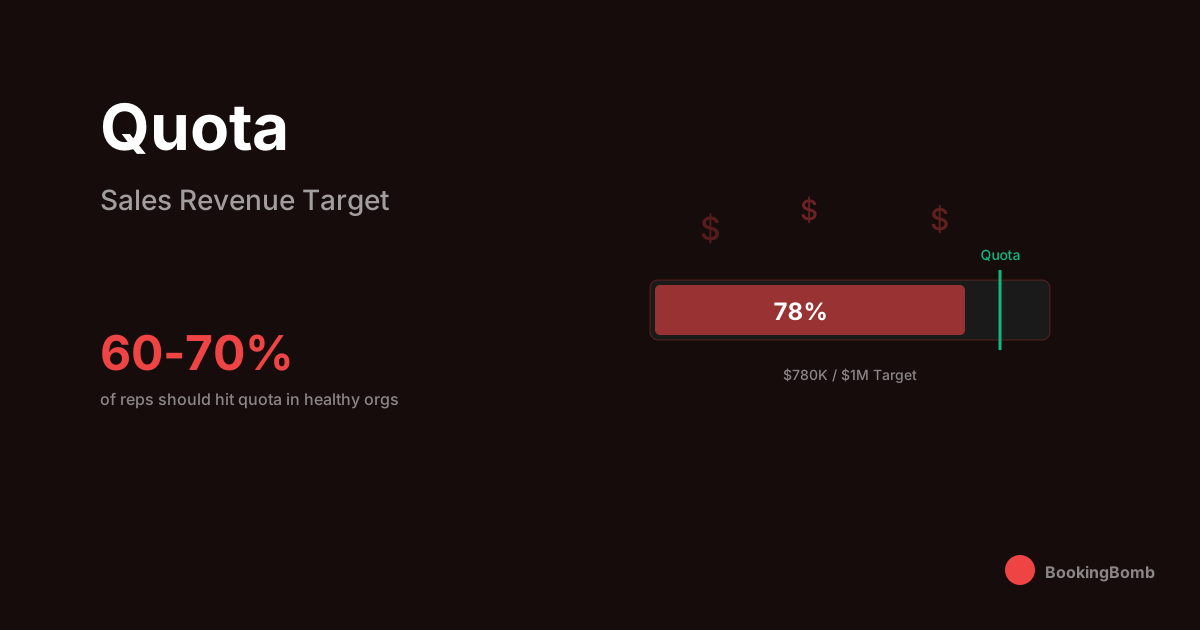
Quotas create clarity and motivation. Without a target, salespeople lack direction—they don't know what 'good' looks like or what they're striving for. With a clear quota, every rep knows exactly what's expected and can prioritize accordingly. Quota design directly impacts behavior. Set quotas too low, and reps coast; too high, and they give up. The art is setting quotas that are challenging but achievable—typically designed so 60-70% of reps can hit target. This creates healthy competition and rewards top performers while keeping the broader team motivated. Quotas also enable forecasting and planning. When you know each rep's quota and historical attainment rates, you can predict revenue with reasonable accuracy and plan hiring, territories, and resources accordingly.
60-70%
of reps should hit quota in healthy orgs
21%
average quota attainment across industry
4.9x
typical quota to base salary ratio
How Quota Works
Start with company revenue goals
Quotas flow from the top down. If the company needs $10M in new revenue, that becomes the basis for individual quotas.
Factor in capacity and ramp
Account for rep count, territory potential, and ramp time for new hires. Not everyone contributes equally.
Set individual quotas
Allocate targets to individuals based on territory size, account base, and historical performance. Adjust for ramping reps.
Build compensation around quota
Design commission structures that reward quota attainment—base salary, on-target earnings (OTE), accelerators for overperformance.
Communicate clearly
Ensure every rep understands their quota, how it was set, and how they'll be paid. Ambiguity kills motivation.
Track and adjust
Monitor attainment through the period. If quotas are systematically missed or exceeded, adjust methodology for future periods.
Best Practices
Design quotas so 60-70% of reps hit target—this indicates right balance
Use multiple data points—historical performance, territory potential, market trends
Communicate quota methodology to build trust—mystery breeds resentment
Set realistic ramp quotas for new hires—full quota too early sets them up to fail
Include accelerators for overperformance—top reps should see significant upside
Align quotas with company goals—if retention matters, quota should reflect it
Review quota attainment distribution—if it's binary (all or nothing), something's wrong
Adjust quotas when major changes occur—new product, new territory, market shift
Common Mistakes
- • Setting quotas based on hope rather than data
- • Making quotas unachievable—this demoralizes and drives turnover
- • Setting quotas too low—this caps performance and wastes potential
- • Not ramping new rep quotas—expecting full productivity immediately is unrealistic
- • Changing quotas mid-period without clear reason—this destroys trust
- • Ignoring territory and account quality differences—equal quotas aren't fair quotas
- • Only measuring revenue quota—ignoring activity and pipeline metrics
Related Terms
Stop Studying. Start Closing.
Now you know what Quota means. Let us put it to work for you.
Book Your Strategy Call