What is Buying Committee?
A buying committee is the group of stakeholders within an organization who are involved in making a purchase decision. In B2B sales, especially for complex or high-value purchases, decisions are rarely made by one person. The committee typically includes end users, technical evaluators, financial approvers, executive sponsors, and sometimes legal or procurement professionals. Each brings different criteria, concerns, and influence levels.
Why Buying Committee Matters
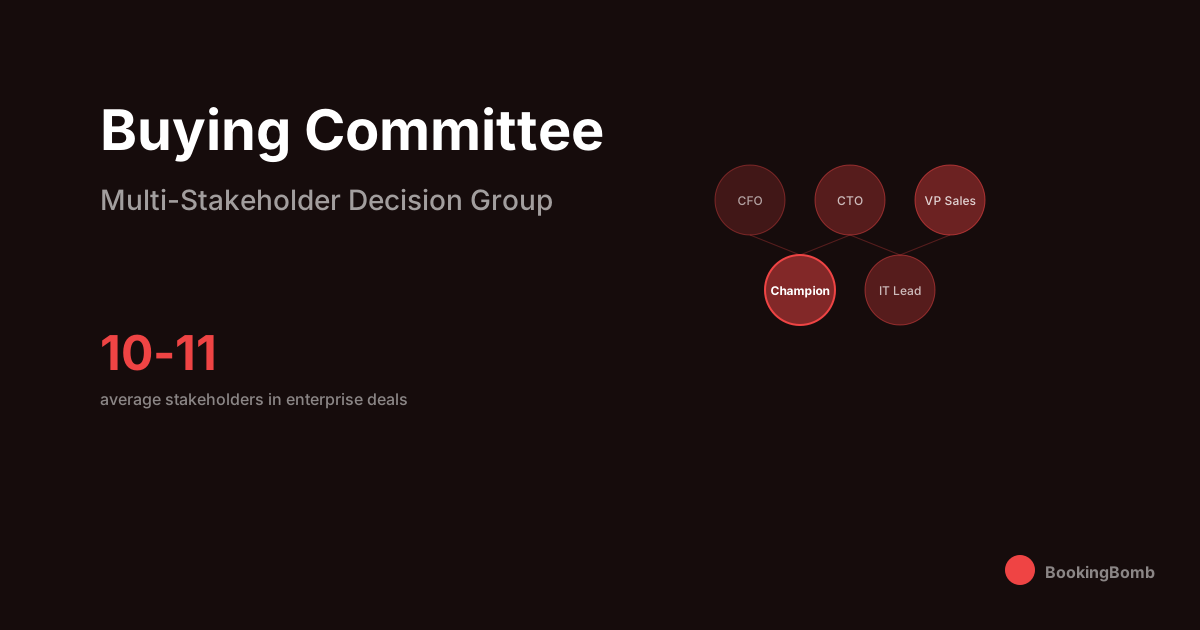
The days of selling to a single decision-maker are largely over in B2B. Average buying committees have grown from 5-6 people to 10-11 in enterprise deals. Every unaddressed committee member is a potential deal-killer—all it takes is one influential 'no' to stall or lose a deal. Selling to committees requires different skills than selling to individuals. You need to understand each stakeholder's role, priorities, and concerns. The CFO cares about ROI and risk; the end user cares about usability; IT cares about security and integration. One pitch doesn't fit all—you need multiple value narratives for the same deal. Mapping the committee early in the sales process prevents surprises. Discovering a new stakeholder at the eleventh hour who wasn't sold on the project is a common cause of deal delays and losses. Great salespeople ask about the buying process and committee composition in initial discovery.
10-11
average stakeholders in enterprise deals
77%
of B2B buyers say purchasing is complex
6-12
months average enterprise sales cycle
How Buying Committee Works
Map committee membership
Identify all stakeholders involved in the decision. Ask directly: 'Who else will be involved in evaluating and approving this decision?'
Understand roles and influence
For each stakeholder, understand their role: economic buyer, user, influencer, legal/compliance, IT security. Know who has veto power.
Identify the Champion
Find the internal advocate who wants you to win and will sell for you when you're not in the room. Without a Champion, committee sales stall.
Tailor messaging per stakeholder
Develop different value propositions for different roles. The CFO presentation is not the IT security presentation.
Multi-thread your relationships
Build connections with multiple committee members. Over-reliance on one contact creates fragility.
Track engagement and concerns
Monitor where each stakeholder stands—supportive, neutral, or resistant. Address concerns proactively.
Best Practices
Ask about the buying process and committee early in discovery—don't wait until proposal stage
Request introductions to other stakeholders—your Champion should help you connect
Create stakeholder-specific content: ROI analysis for finance, security review for IT, case studies for users
Multi-thread deliberately—aim for 3+ relationships in any significant deal
Track committee engagement in your CRM—know who you've met and who you haven't
Prepare for the 'no' votes—understand who might resist and why, then address proactively
Help your Champion sell internally—arm them with materials and talking points
Recognize that consensus takes time—rushing committees leads to no-decisions
Common Mistakes
- • Assuming one contact can push through the deal—rarely true in enterprise sales
- • Not asking about the committee until late stages—surprises kill deals
- • Using the same pitch for every stakeholder—different roles have different concerns
- • Single-threading on just your main contact—if they leave or lose influence, you're stuck
- • Ignoring junior influencers—they may not approve, but they can definitely block
- • Not enabling your Champion—they want to help but need ammunition
- • Rushing to close before the full committee is aligned—this causes deals to stall
Related Terms
Stop Studying. Start Closing.
Now you know what Buying Committee means. Let us put it to work for you.
Book Your Strategy Call