What is Buyer Persona?
A buyer persona is a semi-fictional representation of your ideal customer based on market research and real data about your existing customers. Unlike ICP (which describes ideal companies), buyer personas describe the individuals within those companies—their roles, goals, challenges, and decision-making behaviors. Personas humanize your audience and guide marketing messages, sales approaches, and product decisions.
Why Buyer Persona Matters
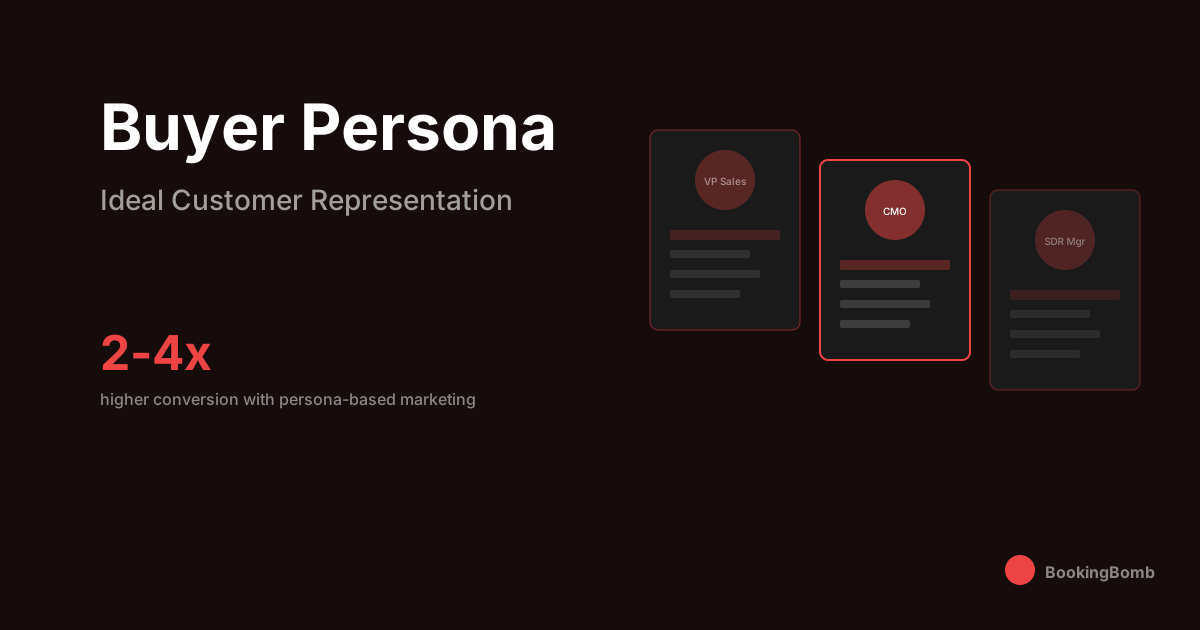
Generic messaging lands with no one. Buyer personas enable specificity—when you know exactly who you're talking to, you can craft messages that resonate with their specific situation, language, and concerns. Marketing becomes a conversation, not a broadcast. In B2B, you're typically selling to multiple personas within a buying committee. The VP of Sales cares about different things than the IT Director or the CFO. Understanding each persona lets you tailor your approach and materials for different stakeholders in the same deal. Personas also align your entire go-to-market team. When marketing, sales, and product share common understanding of who they're serving, efforts coordinate naturally. Without personas, teams often talk past each other about who the customer really is.
2-4x
higher conversion with persona-based marketing
3-5
typical number of personas per B2B company
71%
of companies exceeding goals use personas
How Buyer Persona Works
Research your actual customers
Interview existing customers about their roles, goals, challenges, and buying process. Real data beats assumptions.
Identify common patterns
Look for clusters of similar characteristics—job function, seniority, challenges, information sources. These clusters become personas.
Document key attributes
For each persona, capture: job title/function, goals and KPIs, challenges and pain points, buying process role, objections, preferred content/channels.
Name and humanize
Give each persona a name and backstory. 'Marketing Mary' is more memorable than 'Marketing Leader Persona #2.'
Map to buying committee roles
Understand where each persona fits in the buying process—champion, economic buyer, end user, blocker, etc.
Activate across teams
Use personas in content creation, sales enablement, product development, and customer success. They should guide daily decisions.
Best Practices
Base personas on real customer research, not internal assumptions
Keep the number manageable—3-5 personas is typically sufficient
Update personas regularly as your market and customers evolve
Include negative personas—who you explicitly don't sell to
Map persona-specific messaging and content for each
Train sales teams on personas and how to recognize them
Use personas in content planning—every piece should target specific personas
Validate personas with customer-facing teams—they'll catch mistakes
Common Mistakes
- • Creating personas from imagination instead of research
- • Making too many personas—this creates confusion and dilutes focus
- • Building personas once and never updating them
- • Not socializing personas beyond marketing—sales and product need them too
- • Creating personas that are too generic to be useful
- • Confusing personas (individual profiles) with ICP (company profiles)
- • Not mapping personas to buying committee roles in complex sales
Related Terms
Stop Studying. Start Closing.
Now you know what Buyer Persona means. Let us put it to work for you.
Book Your Strategy Call