Paid Advertising Lead Generation as a Lead Source
Everything you need to know about using paid advertising lead generation to generate B2B leads.
BookingBomb Verdict
Situational
Paid advertising - particularly LinkedIn Ads and Google Ads - can be highly effective for B2B lead generation, but success depends heavily on your economics, targeting, and funnel. LinkedIn offers unmatched B2B targeting by job title, company, industry, and seniority, making it ideal for reaching specific decision-makers. Google Ads captures high-intent prospects actively searching for solutions. However, B2B paid advertising is expensive, and poor execution burns budget fast. We recommend it situationally: when you have validated product-market fit, clear unit economics that support CPAs of $100-500+, and dedicated resources to optimize campaigns continuously. For earlier-stage companies or those with tight budgets, organic and outbound channels often deliver better ROI.
Avg Cost/Lead
$75-300
Lead Quality
Medium-High
Time to Results
1-4 weeks
Scalability
Very High
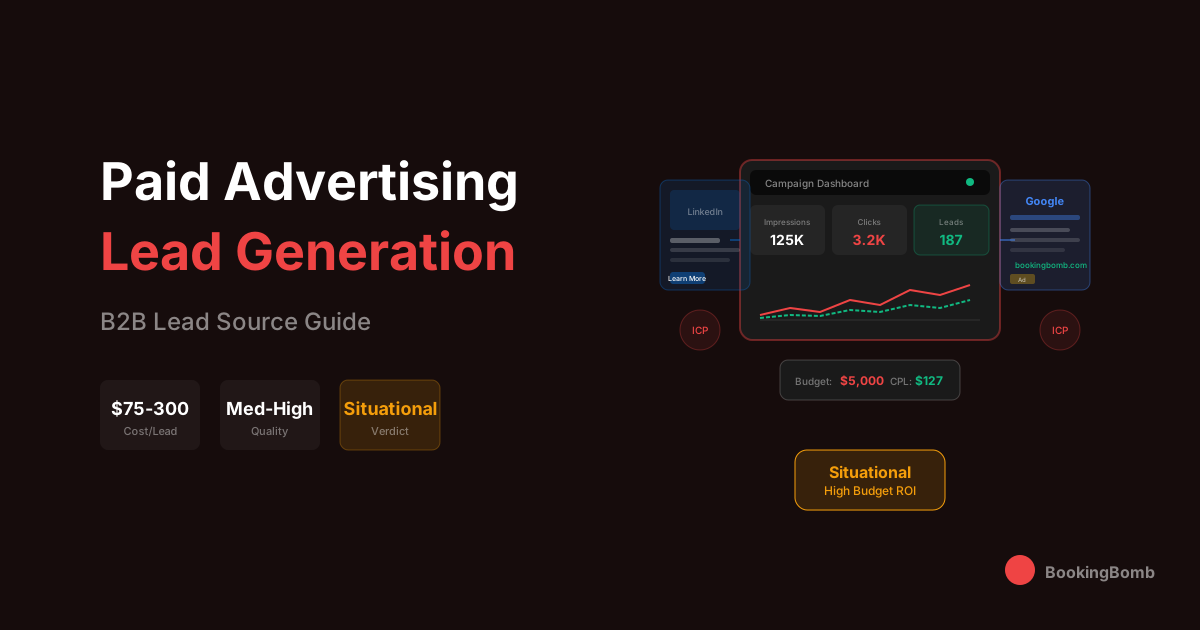
What is Paid Advertising Lead Generation?
Paid advertising for B2B lead generation primarily involves LinkedIn Ads and Google Ads, though Facebook, Twitter, and programmatic display also play roles for certain audiences. LinkedIn Ads excel at B2B targeting - you can reach specific job titles, industries, company sizes, seniority levels, and even specific companies. Campaign types include Sponsored Content (feed ads), Message Ads (LinkedIn InMail), Lead Gen Forms (in-platform lead capture), and Conversation Ads (chatbot-style engagement). Google Ads captures prospects actively searching for solutions through Search campaigns, while Display and YouTube extend reach for awareness and retargeting. The paid advertising model offers speed and scale that organic channels cannot match - you can generate leads within days of launching campaigns. However, this comes at significant cost. B2B CPCs on LinkedIn range from $5-15+, and Google Ads for competitive B2B keywords can exceed $50+ per click. Success requires tight targeting, compelling creative, strong landing pages, and continuous optimization. Without proper tracking and attribution, it's easy to burn budget without understanding what's working. Paid advertising works best as part of a multi-channel strategy - capturing demand created by content, outbound, and brand activities.
Pros & Cons
The Good
- Immediate results - start generating leads within days of campaign launch
- Highly scalable - increase budget to increase volume (with diminishing efficiency)
- Precise targeting on LinkedIn by job title, company, industry, seniority, and more
- Intent capture on Google - reach prospects actively searching for solutions
- Detailed analytics and attribution for measuring ROI
- A/B testing capabilities for rapid creative and messaging optimization
- Retargeting enables multi-touch journeys that nurture cold traffic to conversion
- Geographic and demographic control for market expansion or localization
The Bad
- Expensive - LinkedIn CPCs of $5-15+ and B2B Google keywords $20-100+ mean high CPLs
- Leads stop immediately when spend stops - no compounding or residual value
- Requires significant budget to gather statistically meaningful optimization data
- Ad fatigue and audience saturation limit scale in narrow B2B markets
- Platform expertise required - poor campaign structure wastes budget quickly
- Landing page quality dramatically impacts conversion rates and CPLs
- Competition for B2B audiences drives costs up continuously
- Lead quality varies - paid leads often require more nurturing than organic inbound
Best For
How to Use Paid Advertising Lead Generation Effectively
Define Your Target Audience with Precision Before Spending
Wasted spend usually stems from poor targeting. Before launching campaigns, define your ICP precisely: job titles (not just functions - 'VP of Marketing' vs 'Marketing'), company sizes (employee count and revenue ranges), industries, geographic regions, and behavioral signals. On LinkedIn, use Matched Audiences to upload target account lists or website visitors. On Google, develop comprehensive keyword lists with proper match types and negative keywords. The tighter your targeting, the higher your conversion rates and the lower your effective CPL. Start narrow and expand only after proving ROI.
Start with High-Intent Campaigns and Bottom-Funnel Offers
Don't try to boil the ocean. Start with campaigns targeting prospects closest to purchase: Google Search for high-intent keywords ('sales engagement software pricing,' 'CRM for startups'), LinkedIn targeting competitors' customers or job titles that indicate active buying. Offer demo requests, free trials, or consultations - bottom-funnel actions that indicate real intent. Only after proving ROI at the bottom expand to mid-funnel (ebooks, webinars) and top-funnel (awareness) campaigns. Many companies burn budget on top-funnel ads without proving the bottom works.
Build Dedicated Landing Pages That Match Ad Intent
Never send paid traffic to your homepage. Every ad campaign needs a dedicated landing page that matches the ad's promise and the prospect's intent. If your ad offers a 'Free B2B Sales Playbook,' the landing page should prominently feature that playbook - not your product. Include social proof, clear value propositions, and a single focused CTA. Remove navigation that allows visitors to wander. A/B test headlines, form length, and page layouts. The difference between 2% and 4% conversion rates halves your cost per lead. Invest in landing page optimization as heavily as ad optimization.
Structure LinkedIn Campaigns by Objective and Audience Segment
LinkedIn's campaign structure matters. Create separate campaigns for different objectives: Lead Gen Form campaigns (capture leads without leaving LinkedIn - higher conversion but often lower quality), Website Conversions (send to landing pages - lower conversion but more qualified), and Awareness/Engagement (for retargeting pools). Segment audiences into separate campaigns: different job titles, industries, company sizes. This enables precise budget allocation and performance analysis. Use LinkedIn's audience expansion cautiously - it often dilutes targeting quality. Monitor frequency caps to avoid ad fatigue in narrow B2B audiences.
Implement Google Ads Search with Proper Keyword Architecture
Google Ads success starts with keyword strategy. Organize keywords into tightly themed ad groups with specific ads matching search intent. Use a mix of match types: exact match for high-intent, known converters; phrase match for variations; broad match only with smart bidding and strong negative keyword lists. Build comprehensive negative keyword lists to prevent waste on irrelevant searches. Focus budget on keywords indicating buying intent: 'pricing,' 'reviews,' 'vs,' 'alternatives,' 'best [category].' Monitor search term reports weekly to add converting queries and negative out waste. Quality Score matters - improve it through ad relevance, landing page experience, and CTR.
Build Retargeting Sequences for Multi-Touch Conversion
Most B2B prospects don't convert on first touch. Build retargeting sequences that nurture visitors through the funnel. First layer: retarget all website visitors with brand awareness and social proof. Second layer: retarget visitors to high-intent pages (pricing, demo, product pages) with direct conversion offers. Third layer: retarget content engagers with related offers that deepen engagement. Fourth layer: retarget lead form abandoners with reduced friction offers. Use frequency caps to avoid annoying prospects. Retargeting typically delivers 3-5x better conversion rates than cold traffic - it's often your highest-ROI paid spend.
Track Everything and Calculate True Cost Per Opportunity
Paid advertising is only as good as your measurement. Implement full-funnel tracking: impressions, clicks, leads, MQLs, SQLs, opportunities, closed-won revenue. Use UTM parameters consistently and ensure your CRM captures campaign source. Calculate cost per lead, but more importantly cost per opportunity and cost per customer. A $200 CPL that converts to opportunity at 20% and closes at 25% yields $4,000 CAC - is that acceptable for your LTV? Many companies optimize for CPL and miss that their 'expensive' campaigns actually deliver the best customers. Make decisions based on downstream metrics, not vanity metrics.
Typical Results
$75-300
Cost Per Lead
2-5%
Landing Page Conversion
15-25%
Lead to MQL Rate
Alternatives to Consider
Content Marketing
Lower long-term CPL with compounding returns, but requires 6-12 months to see results
LinkedIn Outreach
More direct, personalized approach at lower cost, but less scalable than paid ads
Cold Email Outreach
Much lower cost per contact, but requires list building and deliverability management
Explore More Resources
Dive deeper into B2B lead generation with our comprehensive resource library.
Not Sure Which Channel is Right for You?
We'll analyze your business and tell you exactly where your leads should come from.
Book Your Strategy Call