What is Churn Rate?
Churn rate is the percentage of customers who stop doing business with you during a given time period. In subscription businesses, it's calculated as customers lost divided by customers at the start of the period. Churn is the silent killer of growth—even small monthly churn compounds into massive annual customer loss, making it impossible to grow without constantly replacing lost revenue.
Why Churn Rate Matters
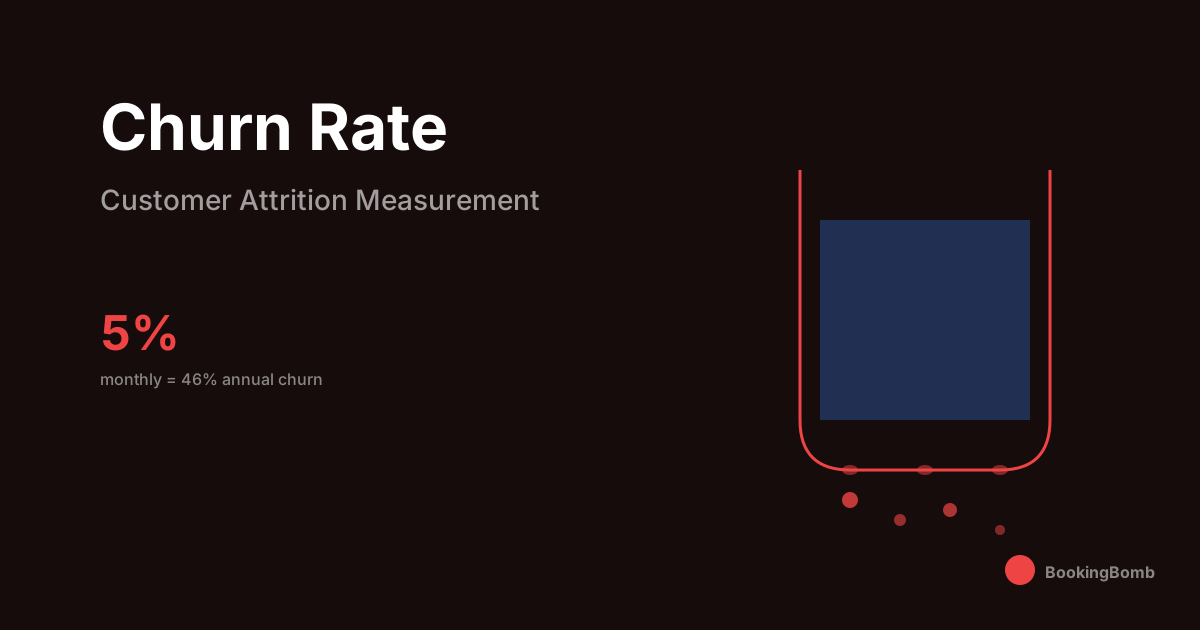
Churn is a leaky bucket problem. You can pour leads into the top all day, but if customers are leaving out the bottom, you'll never fill it. A 5% monthly churn rate sounds small until you realize it means losing 46% of your customers annually. At that rate, you need to acquire nearly half your customer base every year just to stay flat. Churn directly impacts LTV, and therefore how much you can spend on acquisition. Cut churn in half, and you roughly double customer lifetime—which doubles LTV. This math is why investors obsess over churn rates; they reveal whether customers actually value your product. Churn is also a canary in the coal mine for product and service issues. Rising churn signals that something is wrong—competitors are better, your product isn't delivering value, or your customers have outgrown you. Catching churn increases early lets you fix problems before they become existential.
5-7%
annual churn is considered 'best in class'
46%
annual loss from 5% monthly churn
5%
retention increase can boost profits 25-95%
How Churn Rate Works
Define churn criteria
Determine what constitutes a churned customer—contract cancellation, non-renewal, or account closure. Be consistent in your definition.
Choose measurement period
Calculate monthly or annual churn depending on your business model. Monthly is more actionable; annual smooths out noise.
Calculate the rate
Divide customers lost during the period by customers at the start. If you started with 100 and lost 5, your churn rate is 5%.
Segment churn analysis
Break down churn by customer segment, acquisition source, contract size, and tenure. Aggregate churn hides where problems actually are.
Identify churn drivers
Analyze why customers leave—survey churned customers, examine usage patterns before churn, and look for common characteristics.
Track leading indicators
Monitor engagement metrics, support tickets, and usage patterns that predict churn before it happens. Early warning enables intervention.
Best Practices
Track both customer churn (logos lost) and revenue churn (dollars lost)—they tell different stories
Segment churn analysis—first-year churn is different from mature customer churn
Calculate gross vs. net churn—net accounts for expansion and can be negative (good)
Build early warning systems using product usage and engagement data
Conduct exit interviews to understand real reasons for churn
Separate voluntary churn (customer chose to leave) from involuntary (payment failure)
Set churn targets by segment and hold teams accountable
Invest in customer success before acquisition—retention compounds
Common Mistakes
- • Ignoring churn because acquisition numbers look good—this masks a sinking ship
- • Not segmenting churn—different customer types churn for different reasons
- • Only tracking customer churn while ignoring revenue churn
- • Reacting to churn instead of predicting and preventing it
- • Blaming sales for bad-fit customers instead of fixing qualification
- • Not understanding why customers churn—guessing at solutions wastes resources
- • Celebrating low churn without checking if it's sustainable or just a cohort effect
Related Terms
Stop Studying. Start Closing.
Now you know what Churn Rate means. Let us put it to work for you.
Book Your Strategy Call