What is CTA?
A call-to-action (CTA) is a prompt that encourages the audience to take a specific next step—clicking a button, filling out a form, booking a meeting, or making a purchase. CTAs are the conversion points in your marketing and sales materials, bridging the gap between content consumption and meaningful action. Effective CTAs are clear, compelling, and aligned with where the prospect is in their journey.
Why CTA Matters
Content without CTAs is a dead end. You can create the world's best blog post or sales page, but if you don't tell readers what to do next, they'll leave without converting. CTAs capture the moment of interest and channel it toward business outcomes. CTA optimization has outsized impact on conversion rates. Changing the color, copy, or placement of a CTA button can double or triple click-through rates. This is one of the highest-leverage areas for marketing optimization—small changes, big results. In B2B, CTAs must match the buyer's stage. Asking for a demo on a blog post about beginner concepts is premature—offer a relevant content download instead. The right CTA at the right time moves prospects through the funnel naturally.
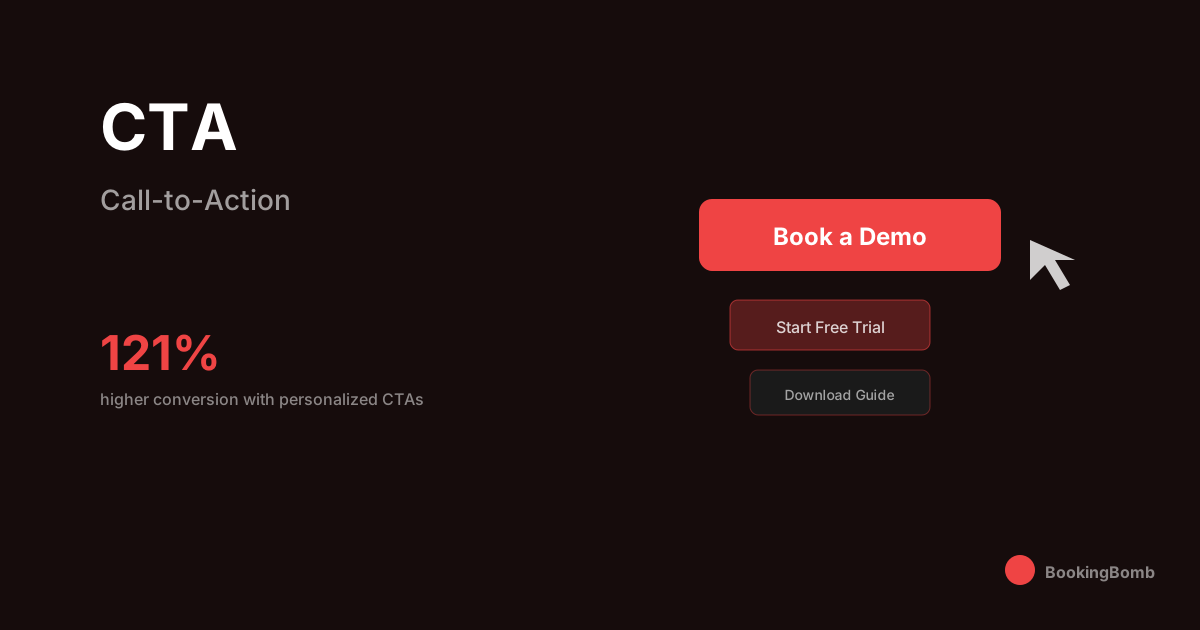
121%
higher conversion with personalized CTAs
37%
of landing pages have weak CTAs
3x
better performance with single-focused CTAs
How CTA Works
Define the desired action
Determine what you want the user to do—download, subscribe, book a demo, request a quote. Each page should have one primary CTA.
Match CTA to user stage
Early-stage visitors get low-commitment CTAs (download guide). Late-stage visitors get higher-commitment CTAs (book demo).
Craft compelling copy
Use action verbs and value-focused language. 'Get Your Free Guide' beats 'Submit.' 'Start My Free Trial' beats 'Sign Up.'
Design for visibility
CTAs should stand out visually—contrasting colors, adequate size, strategic placement. Don't make users hunt for the next step.
Reduce friction
Remove unnecessary form fields, provide social proof near the CTA, and address objections. Every friction point costs conversions.
Test and optimize
A/B test CTA copy, color, size, and placement. Small changes can have significant conversion impact.
Best Practices
Use one primary CTA per page—multiple competing CTAs reduce conversion
Start with action verbs—'Get,' 'Start,' 'Book,' 'Download'
Focus on value to the user, not what they're giving you
Create visual contrast—CTA should pop against page design
Place CTAs above the fold and repeat at natural decision points
Personalize CTAs when possible—returning visitors see different CTAs than new
Test everything—copy, color, size, placement all impact results
Match CTA commitment level to content stage
Common Mistakes
- • Using generic CTAs like 'Submit' or 'Click Here'—boring doesn't convert
- • Too many CTAs on one page—decision paralysis kills conversion
- • CTA doesn't match content context—asking for demo on awareness content
- • CTA blends into page design—it should visually stand out
- • Hiding CTAs at the bottom of long pages only
- • Not testing CTA elements—leaving conversion optimization opportunities on table
- • Asking for too much too soon—high-friction CTAs for cold traffic
Related Terms
Stop Studying. Start Closing.
Now you know what CTA means. Let us put it to work for you.
Book Your Strategy Call