The Discovery Call Playbook
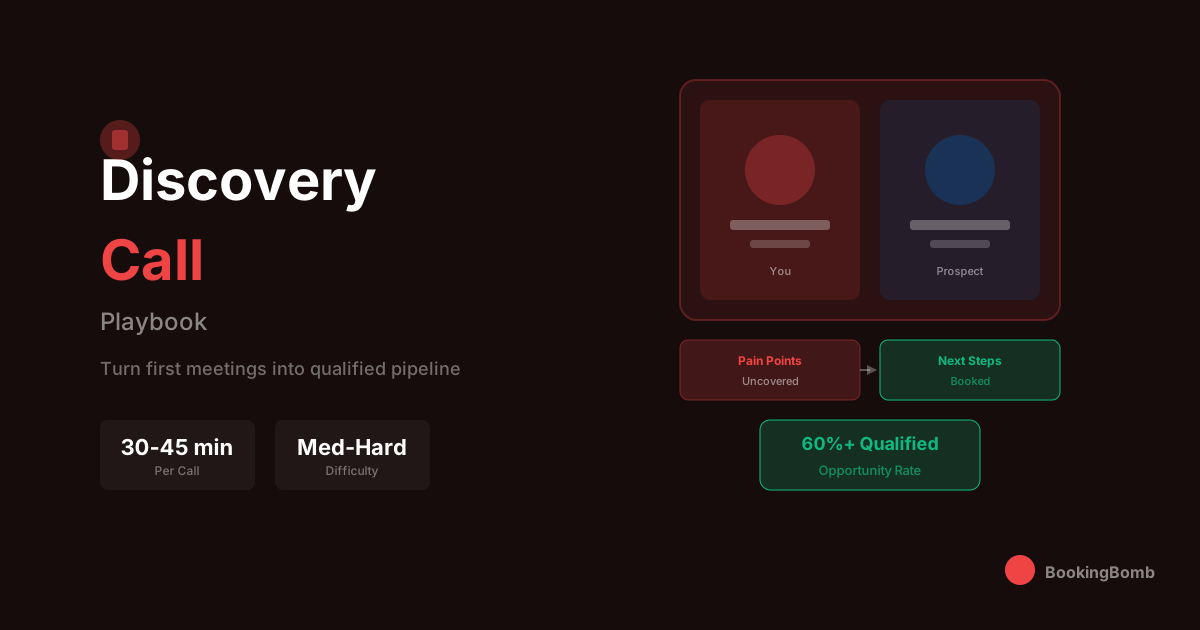
The discovery call framework that qualifies prospects fast, uncovers real pain, and sets up deals that actually close. Turn first meetings into qualified pipeline.
Time to Execute
30-45 min per call
Difficulty
Medium-Hard
Expected Result
60%+ qualified opportunity rate
What This Playbook Covers
How to prepare for discovery calls that don't waste anyone's time
The opening framework that establishes control and builds rapport
Question sequences that uncover real pain (not surface-level symptoms)
How to identify decision-makers and buying processes
Techniques for handling objections mid-call
The close-out that locks in next steps
Common discovery call mistakes that kill deals before they start
Before You Start
- • Meeting booked with a prospect (obviously)
- • Basic research on the company and person you're meeting
- • Your qualification criteria defined (BANT, MEDDIC, or similar framework)
- • Clear understanding of your value proposition and differentiators
- • Calendar access to book follow-up meetings on the spot
- • Note-taking system (CRM, Notion, or simple doc)
The Step-by-Step Process
Pre-Call Research and Preparation
The discovery call is won or lost before it starts. Most reps show up with surface-level knowledge and ask questions they could have answered with 10 minutes of research. That's a waste of the prospect's time and makes you look unprepared. Your pre-call research should cover: Company background—what do they do, who do they serve, how do they make money? Recent news—funding rounds, executive hires, product launches, press coverage. The person you're meeting—their background, how long they've been in role, what they post about on LinkedIn, their career trajectory. Competitive landscape—who else might they be evaluating, what solutions are they likely using now? Industry challenges—what macro trends are affecting their business? You should be able to answer the question: 'Why might this company need what we offer, and what specific problems might this person care about?' This isn't about showing off your research on the call—it's about being prepared to ask smarter questions and recognize when something important comes up. Prepare 3-5 hypothesis questions based on your research. These are educated guesses about challenges they might face that you can validate or invalidate on the call. This shows sophistication and moves the conversation past generic discovery.
Example:
Pre-call prep doc: Company: Acme SaaS | ICP Fit: Yes (Series B, 150 employees, selling to enterprise) | Recent News: Just hired VP of Sales from [competitor] | Hypothesis: Likely scaling outbound for first time, may have tried and failed before | Hypothesis: May have process/tech debt from early days | Key Question: What's driving the focus on outbound now vs. relying on inbound? | Potential Objection: 'We want to build this in-house' | Research gap: Don't know current tech stack
Nail the Opening (First 5 Minutes)
The first five minutes set the tone for the entire call. You're establishing two things: that this will be a productive use of their time, and that you're someone worth talking to. Start with a clear agenda and permission to run the call. Don't ask 'Is now still a good time?'—they already blocked the calendar. Instead, set expectations: 'Thanks for making time. My goal today is to understand your current situation, see if we might be able to help, and figure out if it makes sense to keep talking. I have some questions for you, but I want to make sure we cover what's important to you too. Sound good?' This does three things: establishes you as someone who runs structured meetings, signals this will be a two-way conversation, and gives them permission to share their priorities. After the agenda, offer a brief context-setter—not a product pitch. Something like: 'Quick context on why we're talking—we typically work with [type of company] who are dealing with [common problem]. Based on what I saw, seemed like that might be relevant, but I'd rather hear from you what's actually going on.' Then immediately pivot to them. The opening is not about you. It's about transitioning to their world as quickly as possible while establishing that you know what you're doing.
Example:
Opening script: 'Sarah, thanks for making time today. Here's what I was thinking—I'd love to spend most of our time understanding your current situation and what you're trying to accomplish. I'll share a bit about what we do, but only in the context of whether it might actually be relevant for you. And I want to make sure we leave time for your questions too. Does that work for you? [Pause for yes.] Perfect. Quick context—we typically work with Series B SaaS companies who are scaling outbound for the first time and hitting walls around response rates and pipeline predictability. Saw you recently brought on [VP Sales] so figured there might be some motion there. But I'd rather hear from you—what prompted you to take this meeting?'
Diagnose Current State with Situational Questions
Before you can understand their pain, you need to understand their current reality. This is where most reps go wrong—they either skip this and jump straight to 'what are your challenges?' or they spend the whole call here and never get to the pain. Situational questions establish context. You're building a picture of how things work today. What tools are they using? What does their process look like? What does their team structure look like? How do they measure success currently? Keep these questions efficient. You're not interrogating them—you're filling in the gaps that your research didn't answer. If you did good pre-call prep, you should need fewer situational questions. As you ask these questions, listen for two things: facts about their situation, and emotional cues about how they feel about that situation. When you hear frustration, dig in. When something sounds like it's working well, note it and move on. The goal is to get a complete enough picture that your pain questions can be specific and relevant. Generic discovery questions get generic answers. Specific questions based on understanding their world get meaningful responses.
Example:
Situational questions: 'Walk me through how outbound works today—what does the process look like from lead to booked meeting?' | 'How is the team structured? Who's responsible for what?' | 'What tools are you currently using for prospecting and outreach?' | 'How are you measuring success right now—what metrics does leadership care about?' | 'You mentioned you brought on [new VP Sales]—what's the mandate there?' | When they say something interesting: 'Say more about that—what does that look like day-to-day?'
Uncover Real Pain with Problem Questions
This is where discovery gets interesting. You're moving from 'what is' to 'what's wrong with what is.' Surface-level pain sounds like: 'We need more meetings' or 'Our response rates are low.' Real pain sounds like: 'I'm three months into this role and if we don't hit pipeline targets next quarter, the board is going to question the entire go-to-market strategy.' You get to real pain by asking good follow-up questions and creating space for honest conversation. Start with open problem questions: 'What's working well today and what's not?' Then dig deeper on the challenges. For every problem they mention, ask three things: 'What's the impact of that?' (quantifies the pain), 'How long has this been going on?' (establishes urgency), and 'What have you tried to fix it?' (shows if they're actively solving this). The best discovery reps are genuinely curious. They're not asking questions to check boxes—they're trying to truly understand the prospect's world. That curiosity comes through and builds trust. Don't be afraid of silence. When you ask a hard question, give them space to think. The answer after a pause is usually more honest than the immediate response. You're also listening for implied pain—things they're not saying directly but are clearly frustrated about. When you sense this, reflect it back: 'It sounds like there's some frustration there about [thing]. Is that fair?'
Example:
Problem question sequence: Rep: 'What's the biggest challenge with outbound right now?' | Prospect: 'Response rates are just really low.' | Rep: 'How low are we talking?' | Prospect: 'Like 2-3%.' | Rep: 'And what's the impact of that on pipeline?' | Prospect: 'We're not hitting our numbers. It's a real problem.' | Rep: 'How long has this been going on?' | Prospect: 'Pretty much since we started trying to scale outbound six months ago.' | Rep: 'What have you tried to improve it?' | Prospect: 'We've tested different copy, bought more data, the usual.' | Rep: 'And none of that moved the needle?' | Prospect: 'Not really.' | Rep: 'Six months of effort without results—that's got to be frustrating, especially with whatever targets you're working against. What happens if this doesn't get solved in the next quarter?'
Quantify Impact with Implication Questions
Problems become priorities when people understand the full cost of inaction. Implication questions help prospects connect the dots between their challenges and broader business impact. This isn't about creating fear—it's about helping them see the true scope of the problem. Most prospects underestimate the impact of their problems because they've normalized them. Your job is to help them see the ripple effects. If response rates are low, what does that mean for pipeline? If pipeline is short, what does that mean for revenue targets? If revenue targets are missed, what does that mean for the company, for funding, for their job? These questions should flow naturally from the pain you've uncovered. You're not manufacturing urgency—you're helping them articulate what's actually at stake. Implication questions also help you prioritize. If a problem has massive implications, it's likely a priority. If the implications are minimal, it might not be worth pursuing. This is qualification in action. The key is to ask these questions collaboratively, not manipulatively. You're helping them think through their situation, not leading them to predetermined conclusions. The difference matters for trust.
Example:
Implication questions: 'If outbound continues at current performance, what does that mean for your pipeline targets?' | 'What's the downstream impact on the sales team if they're not getting enough at-bats?' | 'When you think about company growth goals, how central is outbound to hitting those numbers?' | 'If you don't crack this in the next quarter, what does that look like for the team—or for you personally?' | 'How is this affecting team morale or your ability to retain good people?' | 'What opportunities are you leaving on the table by not having this working?'
Understand the Buying Process and Decision-Makers
You can run perfect discovery, uncover massive pain, and still lose the deal because you didn't understand how decisions get made. Every discovery call should include questions about the buying process, stakeholders, and decision criteria. This isn't being salesy—it's being professional and respecting everyone's time. Ask directly: 'If you decide this is something worth pursuing, walk me through how a decision like this typically gets made.' You want to understand: Who else is involved in this decision? What's the evaluation process? What criteria will you use to decide? What's the timeline? What's the budget situation? Some reps are afraid to ask these questions, thinking it's premature. But it's actually a sign of professionalism. You're not assuming the deal is done—you're understanding what it would take for a deal to happen. Listen for red flags. If they say they're the sole decision-maker for a significant purchase, that's often not true. If they don't know the budget, they might not have authority to buy. If the timeline is vague, this might not be a real priority. Multi-thread early. If there are other stakeholders, start planting seeds to include them. 'Would it make sense to have [other person] on our next call so we're all aligned?' Getting access to power early dramatically increases win rates.
Example:
Buying process questions: 'If we get to a point where this looks like a good fit, who else would need to be involved in that conversation?' | 'How does a decision like this typically get made at [Company]—what's the process?' | 'What would need to be true for you to move forward with something like this?' | 'Have you set aside budget for solving this, or would that need to be figured out?' | 'What's your ideal timeline—when would you want something in place by?' | 'Have you looked at other solutions, or are we the first conversation?' | Multi-threading: 'It sounds like [VP Sales] would want visibility into this. Would it be helpful to loop her in for the next conversation?'
Share Relevant Value (Not a Pitch)
Notice this is step 7, not step 1. By now, you've earned the right to talk about yourself because you understand their world. This is where you share how you might be able to help—but it's not a product demo or a feature dump. It's connecting what you heard to what you can do. Reference the specific problems and implications they shared. 'You mentioned response rates are 2-3% and that's creating real pipeline pressure, especially with the board conversations coming up. Here's how we typically address that...' Then share a relevant story. Not a generic case study—a specific example of a similar company with similar problems who got specific results. Make it concrete: 'We worked with another Series B company that was in almost exactly the same spot. They were doing 50 meetings a month and needed to get to 200. Within 90 days we helped them hit 180 and they've sustained 200+ since.' After sharing your relevant value, check in. 'Does that resonate with what you're dealing with?' or 'How does that land for you?' This turns your pitch into a conversation and lets you know if you're on track. Keep this section short—ideally under 5 minutes. The more talking you do, the less buying they do. Your goal is to share enough that they're curious to learn more, not to explain everything you do.
Example:
Value bridge: 'Based on what you've shared—the response rate challenges, the pipeline pressure, the need to scale outbound quickly—here's how we typically help companies in your situation. We take over the prospecting and outreach engine entirely. Your team focuses on taking meetings and closing, while we handle everything from list building to booking. For context, we worked with [similar company] who was dealing with almost the same situation—new VP Sales, pressure to scale outbound, response rates below 5%. Within 60 days, we had them doing 40+ qualified meetings per month, and they've sustained that for the last three quarters. Does that kind of outcome resonate with what you're trying to achieve?'
Handle Objections with Curiosity
Objections on discovery calls are usually buying signals in disguise. They mean the prospect is taking this seriously enough to think about obstacles. The worst thing you can do is get defensive or immediately try to overcome the objection. Instead, get curious. When they say 'That's interesting, but we've tried agencies before and it didn't work,' don't say 'We're different because...' Say 'Tell me about that experience—what went wrong?' Understanding the objection fully is more important than answering it quickly. Common discovery call objections and how to handle them: 'We want to build this in-house': 'That makes sense. What's driving that preference? Is it cost, control, or something else?' Then explore whether in-house is actually realistic given their constraints. 'We're already talking to [competitor]': 'Good—you should evaluate options. What's your impression so far?' This shows confidence and gives you competitive intel. 'Not sure we have budget for this': 'Understood. Help me understand—is this a timing issue, or do you not see this as something worth investing in right now?' 'We need to think about it': 'Of course. What specifically do you want to think through? I want to make sure I've given you what you need.' The goal isn't to overcome every objection on the spot. It's to understand them deeply and either address them or know what you're working against.
Example:
Objection handling: Prospect: 'I like what you're saying, but we've tried outsourcing this before and it was a disaster.' | Rep: 'That's really helpful to know. What happened?' | Prospect: 'They just blasted generic messages, ruined our domain reputation, and we had to rebuild.' | Rep: 'Yikes. I've seen that too many times. What was missing—was it the targeting, the messaging, or the process?' | Prospect: 'Honestly, all of it. They just wanted volume.' | Rep: 'That's the opposite of how we work—we're actually pretty conservative on volume and obsessive about targeting and copy. But I get why you'd be skeptical given that experience. What would need to be different this time for you to feel confident?'
Close with Clear Next Steps
Every discovery call should end with a clear, mutually agreed-upon next step. Not 'I'll send you some info and follow up next week.' That's not a next step—that's a path to ghosting. The best close summarizes what you learned, confirms there's potential fit, and proposes a specific next action. 'Based on our conversation, it sounds like [summary of their situation and pain]. And from what I shared, there seems to be a potential fit here. Does that match your read?' If yes, immediately propose the next step: 'Great. What I'd suggest is a deeper dive where I can walk you through exactly how we'd approach your situation and you can pressure-test it. I'm also thinking it might make sense to have [other stakeholder] on that call so we're all aligned. I have time [specific day/time] or [specific day/time]—which works better?' Book the meeting on the call. Pull up calendars. Send the invite before you hang up. Deals die in the gray area between calls. If they're not ready to commit to a next step, that's a qualification signal. Ask directly: 'What's holding you back from locking in a next conversation?' You'll either surface a real objection to address or understand that this isn't as high a priority as they implied. End with a clear summary of commitments: 'So just to confirm—I'll send you [specific thing], and we're meeting again on [date/time] with [people]. Anything else you need from me before then?'
Example:
Close sequence: 'Sarah, let me make sure I captured everything. You're dealing with outbound response rates around 2-3%, which is creating pipeline pressure—especially with Q2 targets and board visibility. You've tried a few things that haven't moved the needle, and you're trying to figure out if you build this internally or bring in help. Did I get that right?' | [Confirmation] | 'Based on that, I think there's a real potential fit. What I'd suggest is a follow-up conversation where I walk through exactly how we'd set up your program—targeting, messaging, the whole engine—so you can see if it makes sense for your situation. I'd also love to have [VP Sales] on that call since this affects her team. I have Wednesday at 2pm or Thursday at 10am. Which works?' | [Books meeting] | 'Perfect. I'll send the invite now. I'll also send over a case study from [similar company] before then so you have something concrete to reference. Anything else you need from me before Thursday?'
Pro Tips
Record your calls (with permission) and review them weekly—you'll spot patterns and improve faster
Send a brief recap email within 2 hours of the call summarizing pain points, next steps, and any materials promised
Ask 'What else?' after they answer every major question—the second answer is usually more honest
Mirror their language—if they say 'pipeline problems,' don't call it 'lead generation challenges'
Use the 10-second pause after a prospect stops talking—they'll often fill the silence with more valuable info
End questions with 'Tell me more about that' to go deeper without seeming pushy
Book the next meeting BEFORE you hang up—always leave with calendar holds confirmed
If a call runs long, that's usually a good sign—they're engaged. Don't cut it short for your next meeting
What NOT to Do
- • Don't start with a product demo or pitch—you haven't earned that yet
- • Don't ask questions you could have answered with 10 minutes of research
- • Don't interrupt when they're talking—let them finish even if you're excited to respond
- • Don't accept 'We need more leads' as a complete answer—dig into the why and the impact
- • Don't skip stakeholder and budget questions because they feel awkward—you need this info
- • Don't let them run the call if it means you don't get through your qualification criteria
- • Don't promise features or timelines you can't deliver to make the call go well
- • Don't end with 'I'll follow up next week'—that's not a next step
- • Don't pitch to someone who isn't qualified—better to end early than waste everyone's time
- • Don't take bad notes—if you can't remember what was said, you can't follow up effectively
Explore More Resources
Want Us to Run This Playbook For You?
Skip the learning curve. Let BookingBomb execute this at scale while you focus on closing.
Book Your Strategy Call