What is Email Deliverability?
Email deliverability refers to the ability of your emails to successfully reach recipients' inboxes rather than being filtered to spam, blocked entirely, or bounced. It's influenced by sender reputation, authentication protocols, content quality, and list hygiene. Poor deliverability means your carefully crafted messages never get seen—you're essentially shouting into a void.
Why Email Deliverability Matters
Deliverability is the foundation of email effectiveness. If your emails don't reach the inbox, nothing else matters—open rates, click rates, and conversions are all zero for messages that land in spam. And the problem is often invisible. You might be sending thousands of emails thinking they're working while most never get seen. Inbox providers are increasingly aggressive about filtering. Google, Microsoft, and others use complex algorithms analyzing sender behavior, engagement rates, and content quality. One mistake can tank your domain's reputation, making even legitimate emails to opted-in contacts disappear into spam folders. B2B email is particularly vulnerable. Sales and marketing teams often send high volumes with low engagement rates, which is exactly what spam filters are designed to catch. Maintaining deliverability requires constant attention to authentication, list quality, and sending practices.
20%
of marketing emails never reach inbox
85%
of email is spam globally
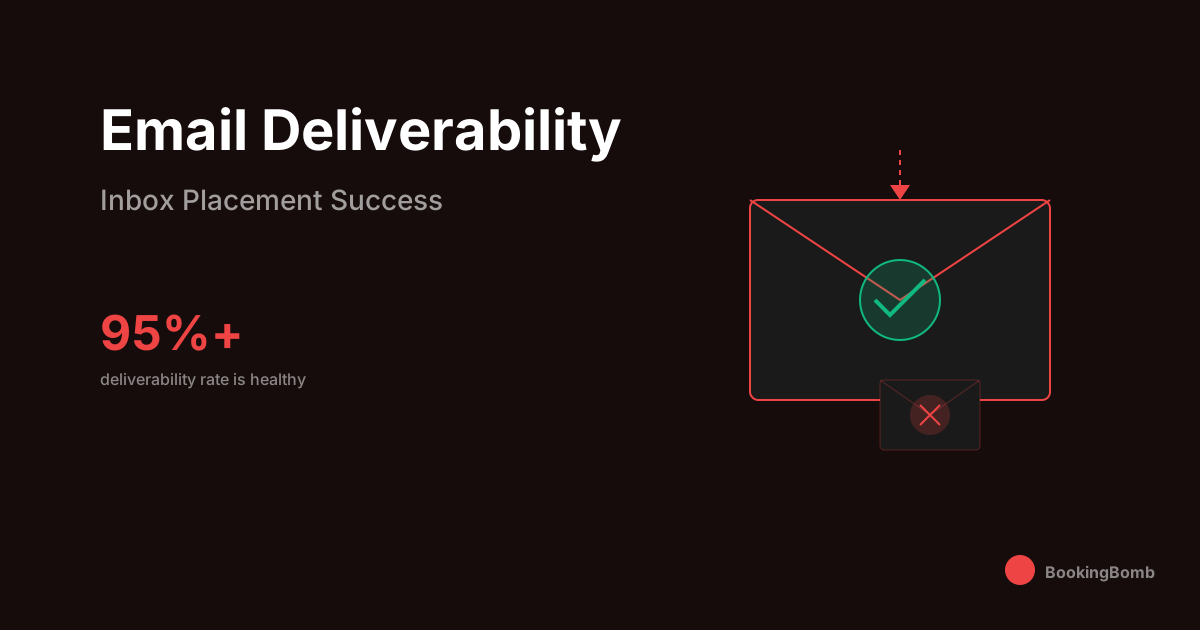
95%+
deliverability rate is considered healthy
How Email Deliverability Works
Configure authentication
Set up SPF, DKIM, and DMARC records for your sending domain. These protocols verify you're authorized to send email from your domain.
Warm your sending domain
New domains start with no reputation. Gradually increase sending volume over weeks while maintaining high engagement to build positive reputation.
Maintain list hygiene
Regularly remove bounces, unsubscribes, and inactive contacts. Sending to bad addresses damages reputation.
Monitor engagement metrics
Track open rates, click rates, and spam complaints. Low engagement signals to inbox providers that you're sending unwanted email.
Watch bounce rates
Hard bounces (invalid addresses) immediately hurt reputation. Soft bounces (temporary issues) matter if persistent.
Test and monitor
Use tools like GlockApps or Mail-Tester to check inbox placement across providers. Monitor blacklist status regularly.
Best Practices
Implement all three authentication protocols—SPF, DKIM, and DMARC
Never buy email lists—purchased lists destroy deliverability
Remove hard bounces immediately and soft bounces after 3 attempts
Warm new domains slowly—start with engaged contacts and low volume
Monitor spam complaint rates—stay below 0.1%
Make unsubscribe easy—hidden unsubscribe leads to spam complaints
Send consistently—erratic volume patterns trigger spam filters
Use a subdomain for marketing email to protect your main domain
Common Mistakes
- • Skipping email authentication—even legitimate emails get filtered without SPF/DKIM/DMARC
- • Sending to purchased lists—this is the fastest way to destroy your domain reputation
- • Ignoring bounce management—continuing to send to invalid addresses compounds problems
- • Sending too much too fast from a new domain—warmup takes weeks, not days
- • Not monitoring deliverability—many senders don't know they have problems until revenue drops
- • Making unsubscribe difficult—frustrated recipients mark as spam instead
- • Using spam trigger words excessively—'free,' 'guarantee,' 'act now' in subject lines hurt
Related Terms
Stop Studying. Start Closing.
Now you know what Email Deliverability means. Let us put it to work for you.
Book Your Strategy Call