Sales Cycle Length Benchmarks
How long should your B2B sales cycle be? We analyzed deal data across industries and deal sizes to establish benchmark sales cycle lengths and identify what separates fast-closing teams from the rest.
The Number That Matters
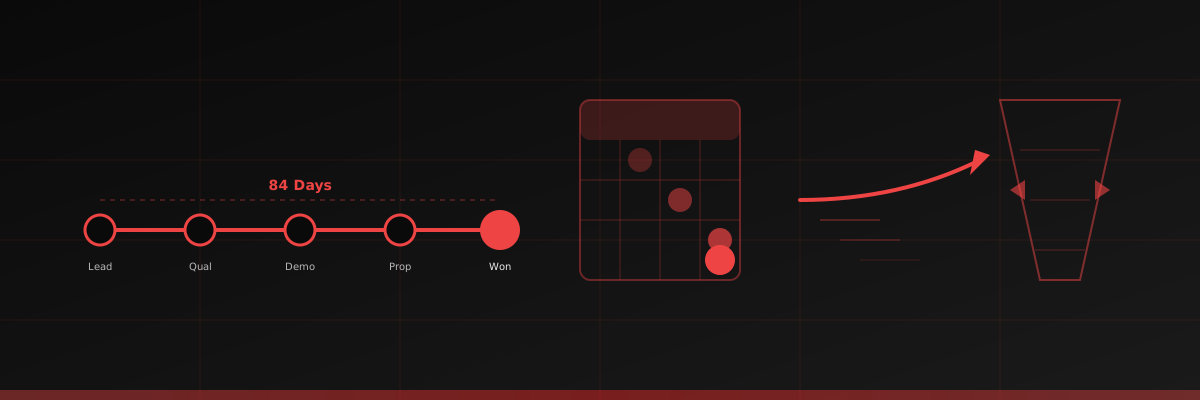
84 days
Average B2B Sales Cycle Length
The Numbers
| Category | Poor | Average | Good | Excellent |
|---|---|---|---|---|
| SMB (<$10K ACV) | >45 days | 21-35 days | 14-20 days | <14 days |
| Mid-Market ($10K-$50K) | >90 days | 45-75 days | 30-44 days | <30 days |
| Enterprise ($50K-$250K) | >180 days | 90-150 days | 60-89 days | <60 days |
| Strategic (>$250K) | >365 days | 180-300 days | 120-179 days | <120 days |
| Inbound Deals | >60 days | 30-50 days | 20-29 days | <20 days |
| Outbound Deals | >120 days | 60-100 days | 45-59 days | <45 days |
By Industry
SaaS (SMB)
SaaS (Enterprise)
Professional Services
Financial Services
Manufacturing
Healthcare
IT Services/MSP
Marketing/Agency
How to Read These Numbers
Above industry average
Your sales cycles are longer than they should be. This is costing you revenue velocity and cash flow. Common causes include poor qualification, lack of urgency creation, too many stakeholders, complex procurement processes, or weak champion development. Every 10% reduction in cycle length can mean 10%+ more annual revenue.
At industry average
You're keeping pace with competitors, but that's the minimum bar. Average cycle times often hide opportunities—some deal types may be closing fast while others drag. Segment your analysis by deal size, source, and rep to find improvement areas.
Below industry average
You're winning the speed game. Faster cycles mean better cash flow, higher win rates (deals that drag often die), and more capacity per rep. Make sure you're not sacrificing deal size or quality for speed.
How to Beat the Average
1. Qualify harder upfront—the #1 cause of long sales cycles is pursuing deals that shouldn't be in your pipeline. Implement rigorous qualification criteria (BANT, MEDDIC, or similar) and be willing to disqualify early
2. Multi-thread from day one—deals with single-threaded champions take 40% longer and have lower win rates. Map the buying committee early and build relationships with multiple stakeholders simultaneously
3. Create and leverage urgency—without a compelling reason to act now, deals drift. Help prospects quantify the cost of inaction and establish clear timelines tied to their business initiatives, not your quota deadline
4. Streamline your own process—audit your sales stages and requirements. Are you creating unnecessary friction? Each additional step or approval on your side adds days. Remove anything that doesn't directly increase win rates
5. Enable champion selling—your champion has to sell internally when you're not there. Arm them with ROI calculators, competitive battle cards, and executive summaries they can forward. Make it easy for them to advocate
6. Address procurement early—don't wait until the end to discover a 30-day legal review or 60-day procurement process. Ask about buying process in discovery and plan backwards from their timeline
7. Use mutual action plans—create shared documents outlining every step from current stage to closed deal with dates and owners. This creates accountability on both sides and surfaces blockers early
8. Analyze your stuck deals—which stage do deals get stuck in most often? Discovery? Proposal? Negotiation? The answer reveals where to focus your process improvements
Explore More Resources
Want to Beat These Benchmarks?
We don't just hit average. We blow past it. Let's talk numbers.
Book Your Strategy Call