Meeting Show Rate Benchmarks
What percentage of booked meetings actually happen? We analyzed the data across industries and booking sources to reveal the true meeting show rate benchmarks.
The Number That Matters
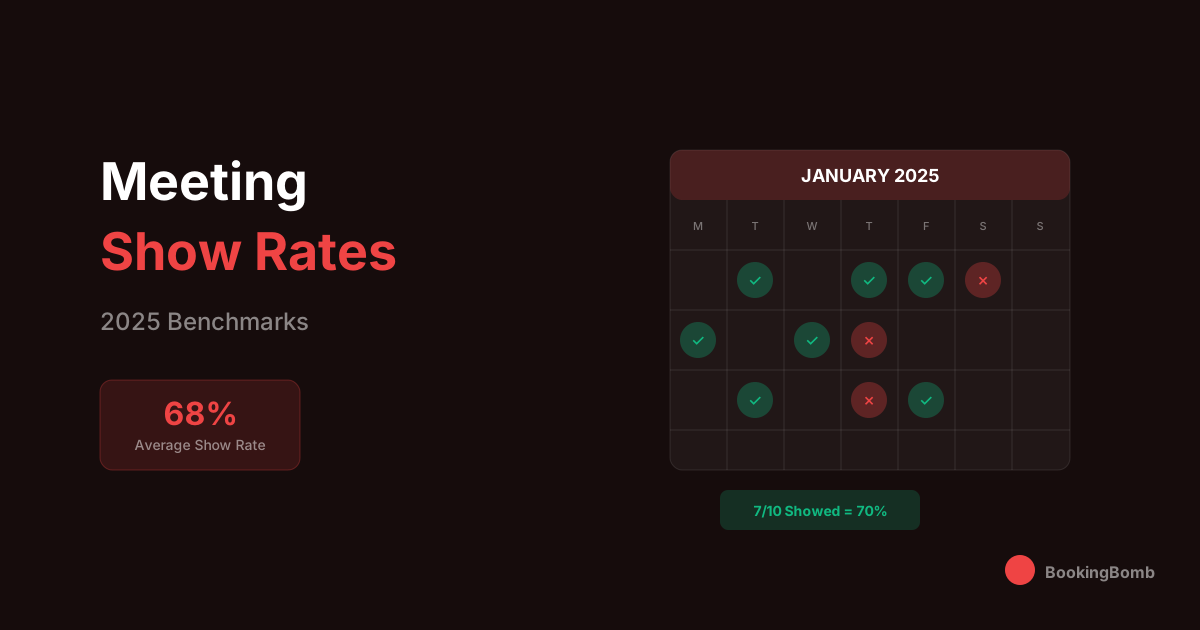
68%
Average B2B Meeting Show Rate
The Numbers
| Category | Poor | Average | Good | Excellent |
|---|---|---|---|---|
| Inbound Demo Request | <60% | 70-80% | 82-88% | >90% |
| Outbound Cold Outreach | <45% | 55-65% | 70-78% | >82% |
| Referral Introduction | <70% | 80-87% | 88-93% | >95% |
| Event/Webinar Follow-up | <50% | 60-70% | 72-80% | >85% |
| LinkedIn Booked Meeting | <40% | 50-62% | 65-75% | >80% |
| Re-engaged Lost Opportunity | <55% | 65-75% | 78-85% | >88% |
By Industry
SaaS/Technology
Professional Services
Financial Services
Healthcare
Manufacturing
Marketing Agencies
IT Services/MSP
Real Estate Commercial
How to Read These Numbers
Below 60%
You're losing nearly half your pipeline before it even starts. This is a critical problem that's costing you revenue. The issue is likely a combination of poor qualification, weak confirmation processes, and inadequate reminder sequences. Every 10% improvement in show rate can mean 15-20% more closed deals.
60-75%
You're in the typical range, but typical means you're still losing 1 in 4 meetings. This is fixable. Most teams in this range are missing systematic confirmation sequences, proper calendar hygiene, or effective pre-meeting engagement. Small improvements here compound into significant revenue gains.
Above 75%
You've got a solid process. Your prospects are showing up because you've built commitment and reduced friction. Keep refining—even moving from 75% to 85% on 100 monthly meetings means 10 more opportunities per month, which could translate to hundreds of thousands in annual revenue.
How to Beat the Average
1. Implement a 3-touch confirmation sequence—send a confirmation email immediately after booking, a reminder 24 hours before with the agenda, and a final reminder 1 hour before. Each touch should add value, not just remind. Include something useful like a relevant case study or pre-meeting questions
2. Reduce time-to-meeting—the longer the gap between booking and meeting, the lower the show rate. Data shows meetings booked within 48 hours have 25-30% higher show rates than those booked 7+ days out. Prioritize near-term availability when possible
3. Add calendar friction strategically—require prospects to add the meeting to their calendar (not just book it). Use calendar platforms that send automatic calendar invites with join links. Meetings that exist only in email have 40% lower show rates
4. Qualify harder before booking—meetings that are truly qualified show up more often. Ask qualification questions before the calendar link. Prospects who invest effort to book are more committed. Consider requiring a brief form or scheduling call for cold outbound
5. Use personalized video in confirmations—a 30-60 second Loom video from the rep thanking them for booking, previewing what you'll cover, and expressing genuine interest creates human connection. Teams using video confirmations report 15-20% higher show rates
6. Offer flexible rescheduling—make it easy to reschedule rather than no-show. Include prominent reschedule links in all reminders. A rescheduled meeting still has a 60-70% chance of happening; a no-show is usually lost forever
7. Leverage social proof pre-meeting—share a relevant customer story or testimonial in your confirmation sequence. Knowing others like them have succeeded builds anticipation and commitment
8. Track and analyze no-show patterns—identify which sources, days, times, and sales reps have the highest no-show rates. You'll often find patterns: certain calendar slots underperform, specific lead sources have lower intent, or individual reps need coaching on their confirmation process
Explore More Resources
Want to Beat These Benchmarks?
We don't just hit average. We blow past it. Let's talk numbers.
Book Your Strategy Call