LinkedIn Connection Rate Benchmarks
What's a good LinkedIn connection acceptance rate? We analyzed thousands of outreach campaigns to bring you the definitive benchmarks for B2B prospecting on LinkedIn.
The Number That Matters
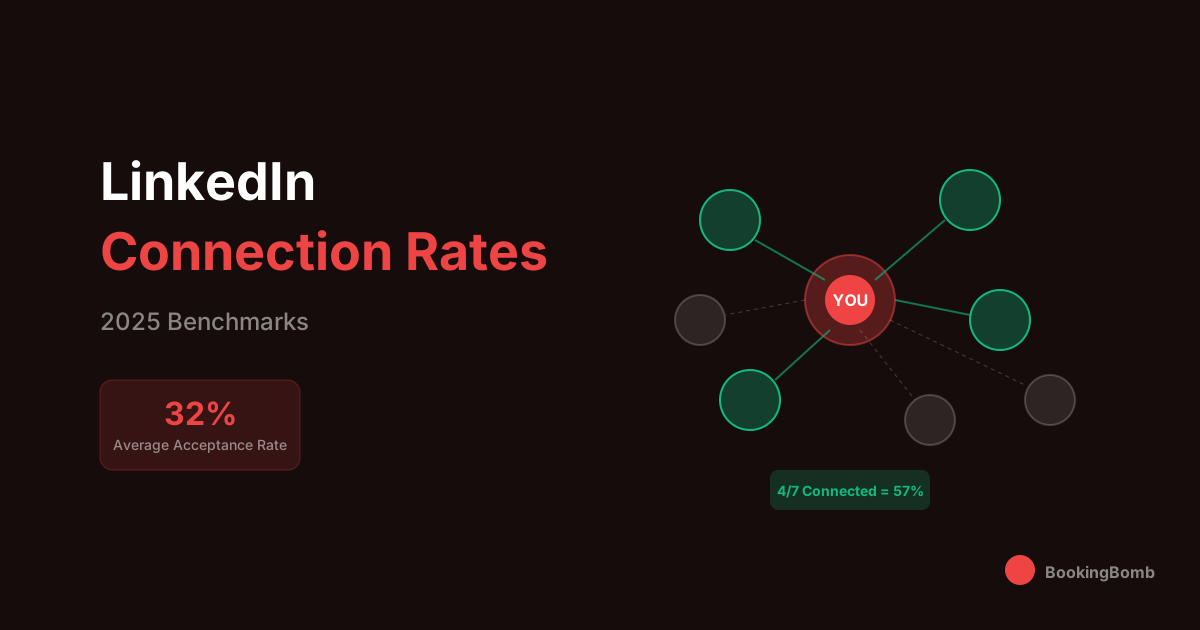
32%
Average LinkedIn Connection Acceptance Rate
The Numbers
| Category | Poor | Average | Good | Excellent |
|---|---|---|---|---|
| Cold Outreach (No Mutual) | <15% | 20-30% | 35-45% | >50% |
| Warm Outreach (Mutual Connections) | <25% | 35-45% | 50-60% | >65% |
| Event/Webinar Follow-up | <30% | 40-50% | 55-65% | >70% |
| Content Engagement Follow-up | <35% | 45-55% | 60-70% | >75% |
| InMail (Premium) | <8% | 12-18% | 20-28% | >32% |
| Sales Navigator Outreach | <18% | 25-35% | 40-50% | >55% |
By Industry
Technology/SaaS
Marketing & Advertising
Financial Services
Healthcare
Manufacturing
Professional Services
Real Estate
E-commerce/Retail
How to Read These Numbers
Below 20%
Your connection requests are likely being ignored or marked as spam. This signals a serious problem with either your targeting, your profile credibility, or your connection message. Prospects may be viewing your outreach as irrelevant or too salesy. Time to audit your entire approach.
20-35%
You're in the average range for cold LinkedIn outreach. Not terrible, but there's significant room for improvement. Focus on profile optimization, personalization, and targeting refinement. You're likely leaving money on the table with generic approaches.
Above 35%
You're outperforming most B2B prospectors on LinkedIn. Your targeting is likely spot-on, your profile builds trust, and your connection messages resonate. Consider scaling your outreach volume while maintaining quality standards.
How to Beat the Average
1. Optimize your LinkedIn profile first—your headshot, headline, and banner are your first impression. Use a professional photo with good lighting, write a headline that speaks to your prospects' problems (not just your job title), and create a custom banner that reinforces your value proposition
2. Personalize every connection request with specificity—reference their recent post, a mutual connection, their company's recent news, or something specific from their profile. Generic messages like 'I'd like to add you to my network' get ignored
3. Target second-degree connections whenever possible—having mutual connections increases acceptance rates by 40-60%. Use LinkedIn's filters to prioritize prospects with shared connections
4. Time your requests strategically—LinkedIn activity peaks Tuesday through Thursday, 8-10am and 5-7pm in your prospect's timezone. Avoid weekends and Monday mornings when inboxes are flooded
5. Build social proof before connecting—engage with prospects' content (meaningful comments, not just likes) for 1-2 weeks before sending a connection request. This warms them up and makes your name familiar
6. Keep connection notes under 300 characters—LinkedIn's character limit forces brevity. Lead with value or relevance, not a sales pitch. Save the pitch for after they accept
7. Clean up your sent invitations regularly—LinkedIn limits you to 100-200 weekly invitations. Withdraw pending requests older than 2-3 weeks to free up capacity and avoid algorithm penalties
8. Segment your outreach by seniority—C-suite executives have lower acceptance rates (22-28%) than managers and directors (35-45%). Adjust your expectations and personalization accordingly
Explore More Resources
Want to Beat These Benchmarks?
We don't just hit average. We blow past it. Let's talk numbers.
Book Your Strategy Call