How to Build a B2B Sales Pipeline from Scratch
The complete framework for building predictable revenue, from first prospect to closed deal.
BookingBomb Team
January 5, 2025
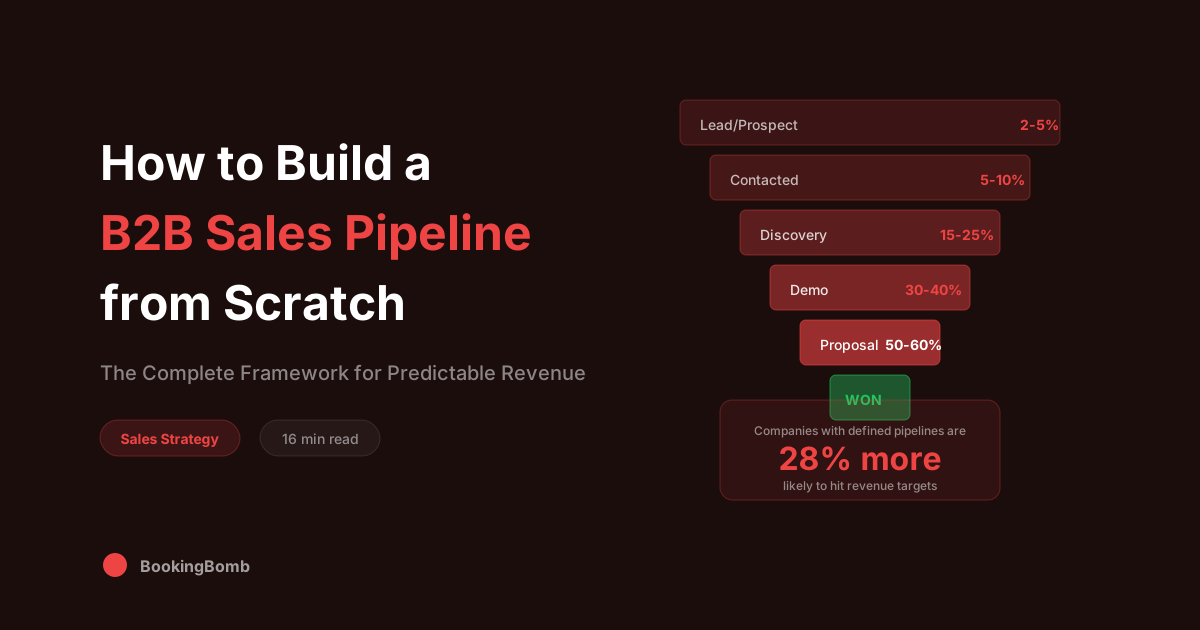
Key Stat
Companies with a defined sales pipeline are 28% more likely to hit revenue targets.
Yet 44% of companies have no formal pipeline process. Here's exactly how to build one from zero.
A sales pipeline isn't a nice-to-have. It's the difference between predictable revenue and hoping deals close. Between knowing your next quarter and guessing at it.
The problem? Most "build your pipeline" advice is either too vague ("define your stages!") or too complex (enterprise systems that take months to implement). You need something practical that you can build this week.
This guide breaks down exactly how to build a B2B sales pipeline from scratch—including the stages, metrics, tools, and processes that actually work for growing companies.
What We'll Cover:
- • The 7 essential pipeline stages (and when to skip some)
- • Setting up your pipeline in 4 hours or less
- • The 12 metrics that actually matter
- • Lead sources that fill your pipeline
- • Tools and tech stack recommendations
- • Common pipeline problems and how to fix them
- • Pipeline review cadence that drives results
What Is a Sales Pipeline, Really?
A sales pipeline is a visual representation of where your prospects are in their buying journey. It shows you how many deals you have, what stage they're in, and how likely they are to close.
More importantly, it's a forecasting system. When done right, you can look at your pipeline today and predict your revenue 30, 60, 90 days from now.
Pipeline vs. Funnel: What's the Difference?
Sales Pipeline
Tracks individual deals and their stages. Seller-focused. Shows what you need to do to close each deal.
Sales Funnel
Tracks conversion rates between stages. Marketing-focused. Shows how many leads you need at each level.
The 7 Essential Pipeline Stages
Every pipeline looks slightly different, but most B2B pipelines follow a similar structure. Here are the 7 stages we recommend starting with:
Lead/Prospect
Raw leads that haven't been contacted yet. Could be from inbound, outbound, events, referrals, etc.
Contacted/Engaged
Prospect has responded to outreach. Two-way conversation has begun. They know who you are.
Discovery/Qualification
You've had a discovery call. You understand their pain, budget, timeline, and decision process. They're qualified (or not).
Demo/Presentation
You've shown them the product or service. They've seen how it solves their specific problem.
Proposal/Quote
You've sent a formal proposal or quote. They're reviewing pricing and terms internally.
Negotiation
Active discussions about price, terms, scope, or timeline. They want to buy—it's about the details.
Closed Won
Contract signed. Money in the bank (or committed). Deal is done.
When to Use Fewer Stages
If your sales cycle is under 30 days or your deal size is under $5K, you probably only need 4-5 stages. More stages = more friction. Match your pipeline complexity to your sales complexity.
Setting Up Your Pipeline in 4 Hours
You don't need weeks to set up a functional pipeline. Here's how to get operational today:
Hour 1: Define Your Stages
Use the 7 stages above as a starting point. Modify based on your sales process. For each stage, define:
- Entry criteria: What needs to happen for a deal to enter this stage?
- Exit criteria: What needs to happen to move to the next stage?
- Win probability: What percentage of deals at this stage typically close?
- Typical time in stage: How long should deals stay here?
Hour 2: Choose Your Tool
You need somewhere to track your pipeline. Options range from free to enterprise:
| Tool | Best For | Price |
|---|---|---|
| Google Sheets | Solo founders, tiny teams | Free |
| HubSpot CRM | SMBs wanting free + upgrades | Free - $800/mo |
| Pipedrive | Sales-focused SMBs | $14-99/user/mo |
| Close CRM | High-velocity sales teams | $49-139/user/mo |
| Salesforce | Enterprise, complex processes | $25-300+/user/mo |
Our recommendation: Start with HubSpot Free or Pipedrive. They're purpose-built for pipeline management and you can migrate to Salesforce later if needed.
Hour 3: Import Your Existing Deals
Gather all your current opportunities from:
- • Email threads with prospects
- • Spreadsheets or notes
- • Calendar (upcoming meetings = active deals)
- • Proposals you've sent
- • Your head (the deals you "just know about")
For each deal, capture: Company, Contact, Deal Size, Current Stage, Next Step, Close Date (estimated).
Hour 4: Establish Your Process
A pipeline without process is just a graveyard of stale deals. Set these habits from day one:
- DDaily: Update every deal you touched that day. Add notes. Move stages.
- WWeekly: Review entire pipeline. Kill dead deals. Flag stale ones. Update close dates.
- MMonthly: Analyze win/loss. Calculate conversion rates. Identify bottlenecks.
The 12 Pipeline Metrics That Actually Matter
You can measure hundreds of things. Focus on these 12:
Pipeline Health Metrics
1. Pipeline Value
Sum of all deal valuesTotal dollar value of all active opportunities. Your "what could be."
2. Weighted Pipeline Value
Deal value x Win probabilityMore realistic forecast. A $100K deal at 20% probability = $20K weighted value.
3. Pipeline Coverage
Pipeline / QuotaHow much pipeline you need to hit quota. 3x-4x coverage is healthy for most B2B.
4. Number of Deals
Count of active oppsToo few deals = concentration risk. Too many = not enough attention per deal.
Velocity Metrics
5. Average Sales Cycle
Days from first contact to closeHow long deals take to close. Track this to forecast accurately.
6. Time in Stage
Days per stage avgIdentifies bottlenecks. If deals die in one stage, that's where to focus.
7. Pipeline Velocity
(Deals x Value x Win%) / CycleHow fast your pipeline converts to revenue. The ultimate health metric.
Conversion Metrics
8. Stage-to-Stage Conversion
% moving to next stageTrack each transition. Discovery-to-Demo at 40%? Demo-to-Proposal at 60%? Know your numbers.
9. Win Rate
Closed Won / Total ClosedWhat percentage of deals you win. Track overall and by source, rep, segment.
10. Loss Reasons
Categorized closed-lostWhy deals die. Price? Timing? Competition? No decision? Fix the pattern, not the symptom.
Activity Metrics
11. New Pipeline Created
New opps this periodAre you adding enough new deals? Pipeline today = revenue tomorrow.
12. Activity per Deal
Touches per opportunityDeals with more activity close at higher rates. Track calls, emails, meetings per deal.
How to Fill Your Pipeline: Lead Source Strategy
A beautiful pipeline with no leads is just a sad, empty Kanban board. Here's how to fill it:
Outbound Email
Direct outreach to prospects who fit your ICP. Scalable and controllable.
LinkedIn Outreach
Connection requests + DMs to decision makers. Higher touch, higher quality.
Content/SEO
Inbound leads from search and content. Long-term play, compounds over time.
Paid Ads
Google, LinkedIn, Facebook ads. Fast results but expensive to scale.
Referrals
Introductions from customers, partners, network. Highest conversion rates.
Events/Webinars
Trade shows, conferences, virtual events. Great for brand + leads.
The Ideal Lead Source Mix
Most successful B2B companies use a combination:
Common Pipeline Problems (and How to Fix Them)
Problem: Pipeline is always "full" but revenue is flat
Diagnosis: You have zombie deals. Opportunities that aren't really opportunities. They just sit there, making your pipeline look healthy while contributing nothing.
Fix: Implement a "pipeline hygiene" rule. Any deal with no activity for 14 days gets marked stale. No response after 3 attempts = closed lost. Be ruthless.
Problem: Deals die between Demo and Proposal
Diagnosis: Your demos aren't creating urgency, or you're losing to "no decision." The prospect is interested but not compelled to act.
Fix: End every demo with a clear next step and timeline. "Based on what you shared, I'll send a proposal by Thursday. Can we review it together on Monday?"
Problem: Not enough new deals entering the pipeline
Diagnosis: Lead generation isn't keeping pace with deal closures. You're depleting your pipeline faster than you're filling it.
Fix: Calculate your "pipeline replacement rate." If you close 10 deals/month, you need to add 30-40 new opportunities to maintain coverage. Build lead gen into daily/weekly habits.
Problem: Sales cycle keeps getting longer
Diagnosis: Deals are stalling somewhere. Usually discovery (not uncovering urgency) or proposal (waiting on "internal review").
Fix: Analyze time-in-stage for your last 20 closed deals. Find the longest stage. That's your bottleneck. Fix it with better qualification, multi-threading, or urgency-building.
Problem: Win rate is declining
Diagnosis: Either lead quality is dropping, competition is increasing, or your sales process isn't evolving with the market.
Fix: Analyze loss reasons. Interview 10 lost prospects. Is it price? Product gaps? Sales experience? The answer will tell you where to focus.
The Weekly Pipeline Review That Drives Results
A pipeline without regular reviews is just data. Here's the 30-minute weekly review format that keeps things moving:
Weekly Pipeline Review Agenda (30 min)
Scoreboard
Pipeline value, weighted value, deals in each stage vs. last week
Commit Deals
Review deals closing this week/month. What's needed to close? Any blockers?
At-Risk Deals
Deals stalled or stuck. Why? What action needed? Kill or revive?
New Opportunities
What came in this week? Quick qualification check. Assign next steps.
The Bottom Line
A B2B sales pipeline isn't complicated. It's just discipline: defining your stages, tracking your deals, measuring your metrics, and reviewing regularly.
The companies that win aren't the ones with the fanciest CRM or the most complex process. They're the ones who actually use their pipeline—updating it daily, reviewing it weekly, and making decisions based on data instead of gut feel.
Start simple. You can build a functional pipeline in 4 hours with the framework above. Then iterate. Add complexity only when you need it.
Need Help Filling Your Pipeline?
We specialize in booking qualified meetings for B2B companies. Pay-per-meeting, no retainer. Let us handle prospecting while you focus on closing.
Ready to Fill Your Pipeline with Qualified Meetings?
Stop guessing, start booking. We'll show you exactly how many meetings we can deliver for your business.
Book Your Strategy Call